


Grim Reminder: A Grim Historian is a reader-supported newsletter and depends on your 5$ donations to keep the most depressing politics and history in your inbox. Please consider becoming a paid subscriber or sharing with someone who loves misery.
During Trump’s first presidency, White House officials developed an unusual way to handle presidential directives they considered dangerous, impractical, or simply batshit crazy.
They said, “We will be right on that, Mr. President,” and then proceeded to distract him with shiny things in hopes he would forget.
Trump almost always forgot.
This strategy required finesse. Reince Priebus reportedly had a favorite technique. If Trump ordered something particularly alarming — or wanted somebody fired — Priebus would assure him it would happen “next week.”
Next week was a wonderful place. Much calmer than this week. Spacious. Plenty of parking.
And, most importantly, by next week Trump was off chasing a new car.
Other aides preferred the ancient bureaucratic art of pretending they were following his orders while they stalled for time. Trump wanted punitive tariffs? Sure. Working on it. Economic advisers Gary Cohn and Rob Porter sometimes even delayed the paperwork.
One time, Trump drafted a letter withdrawing the United States from a trade agreement with South Korea. So Cohn simply stole it off the Resolute Desk. The letter could not be signed if nobody could find the letter, right?
Then Trump suggested invading Venezuela. The Venezuelan defense minister, Vladimir Padrino, called Trump’s military plans an “act of craziness” and “supreme extremism.” National security adviser H.R. McMaster later talked Trump out of it. McMaster resigned in 2018.
Then came the border. We all know by now that Trump does not like to use the courts to control immigration numbers. Not enough pathos. So according to reporting based on interviews with administration officials, Trump discussed a trench stocked with snakes or alligators, an electrified wall, and spikes capable of piercing human flesh.
Somewhere in the federal government, a lackey had to investigate the cost of a reptile moat. Just think…before Trump, America had survived nearly two and a half centuries without requiring a federal crocodile procurement strategy. History is sometimes unpredictable.
Then Trump suggested shooting migrants in the legs to slow them down. He later applied the same video game logic to American protesters. Former defense secretary Mark Esper had to actually explain to Trump why the military cannot shoot its own civilians.
And let’s not forget the hurricanes. In 2019, Axios reported that Trump had repeatedly asked senior officials whether hurricanes approaching the United States could be bombed with nuclear weapons. According to one person who attended a briefing, an official responded with approximately the bureaucratic equivalent of, Excellent thought, sir, we shall alert the Department of Weather Explosions immediately. Thankfully, the idea went nowhere.
This happened often enough that one former White House official described a recurring cycle. Trump would demand tariffs, military action, or some other hair-brained scheme. Of course, staff would delay. Tell him they are busy importing the alligators and consulting moat specialists from the medieval department of “we are fucked.”
A week later Trump would ask what had happened to his grand Princess Bride scheme. He would then discover nothing had happened, get angry, and repeat his rant.
At the time, these stories were hilaaaaaarious. They produced books, anonymous op-eds, and endless jokes about “adult day care.” The president said something clownish. Somebody quietly removed the paperwork. Tomorrow arrived. No nuclear hurricane.
Ha ha. Isn’t it just adorable to be ruled by a ham sandwich wearing a gold crown.
Of course, those people were the guardrails. Throughout Trump’s first administration, there were officials willing to stall him, contradict him, redirect him, ignore instructions, or occasionally make a document disappear beneath the great sofa cushions of democracy.
That was Trump 1.0
Then Trump came back. As a convicted felon and a man found civilly liable for sexual abuse.
Unsurprisingly, the stories changed. The dam broke.
Where did all the adults go?
Trump’s second term did not repeat the staffing experiment of 2017.
The Associated Press reported in 2025 that prospective administration officials underwent intensive screening for ideological alignment and loyalty to Trump’s agenda. Basically, they examined candidates’ past social media posts and looked for criticism of Trump. I would call it a loyalty test, but it was more like an anti-loyalty purge.
Trump had spent years complaining about officials who thwarted him. This time, the government would contain fewer people to tell him no. Unfortunately, a cabinet of flying monkeys willing to do your vicious bidding doesn’t only change policy.
It changes information.
In August 2025, Trump fired Bureau of Labor Statistics Commissioner Erika McEntarfer after the department released a disappointing employment report and unusually large downward revisions to previous job estimates.
That spring, the National Intelligence Council concluded that Venezuela’s government was not directing the Tren de Aragua gang — undercutting a central claim the regime had used to justify invoking the Alien Enemies Act. A week after that assessment, Director of National Intelligence Tulsi Gabbard fired the council’s two top officials.
Apparently, the war intelligence was insufficiently supportive.
Then Trump fired 17 inspectors general across the federal government — the independent watchdogs whose irritating little job is to investigate waste, fraud, abuse, and misconduct inside the very agencies Trump now controlled.
By now, we all see the mafia mentality. Bad employment numbers? Fire the statistician. Intelligence contradicts the story? Fire the intelligence officials. Someone might investigate what everyone else is doing? Whack the investigators.
Eventually, an authoritarian does not have to falsify the numbers. He only has to teach that bad numbers carry consequences.
However, communication is a two-way street. Once the public stops receiving reliable information about the government, the government also stops receiving reliable information about the public.
Which brings us to Bucharest, December 21, 1989.
And a balcony.
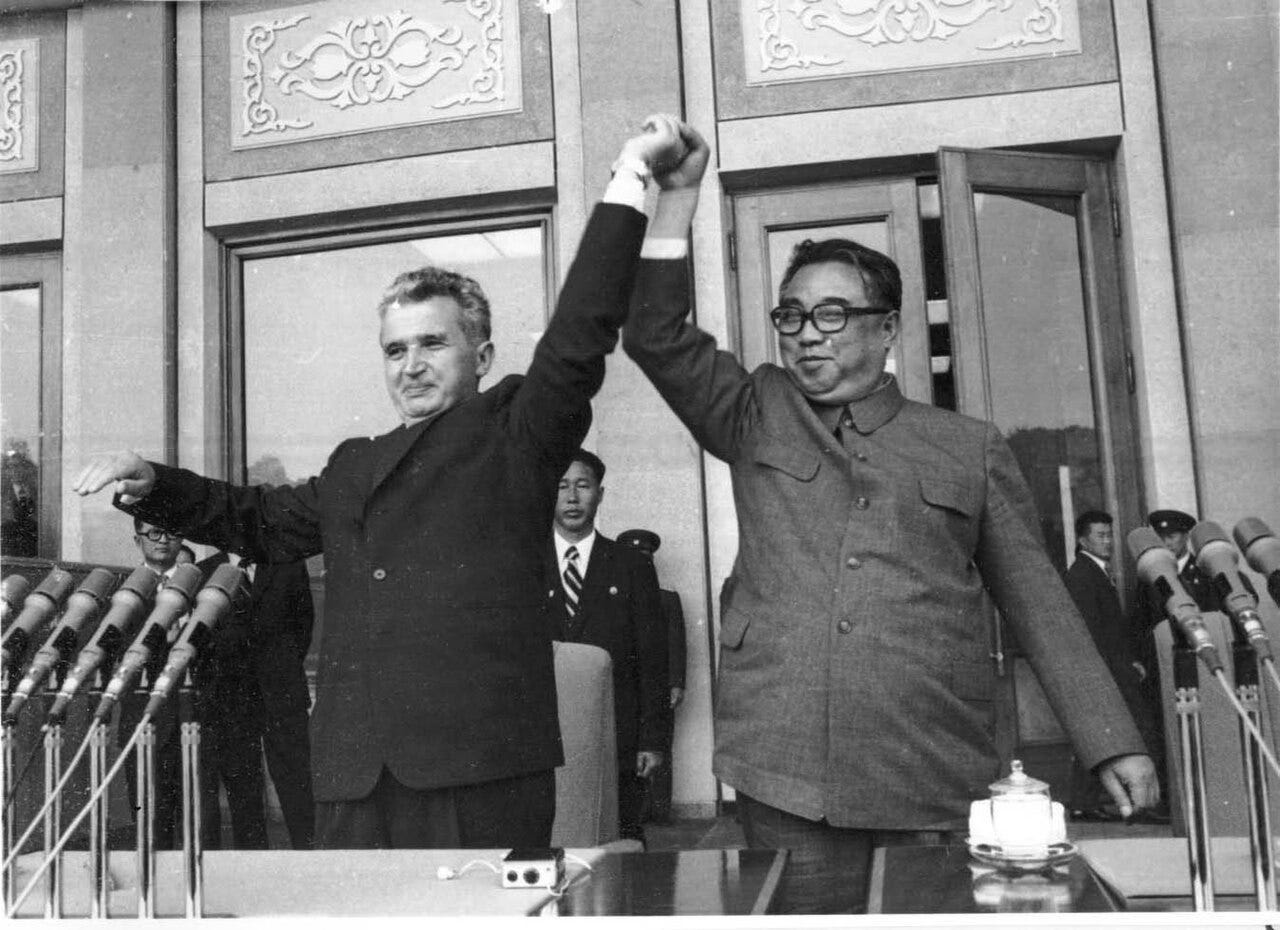

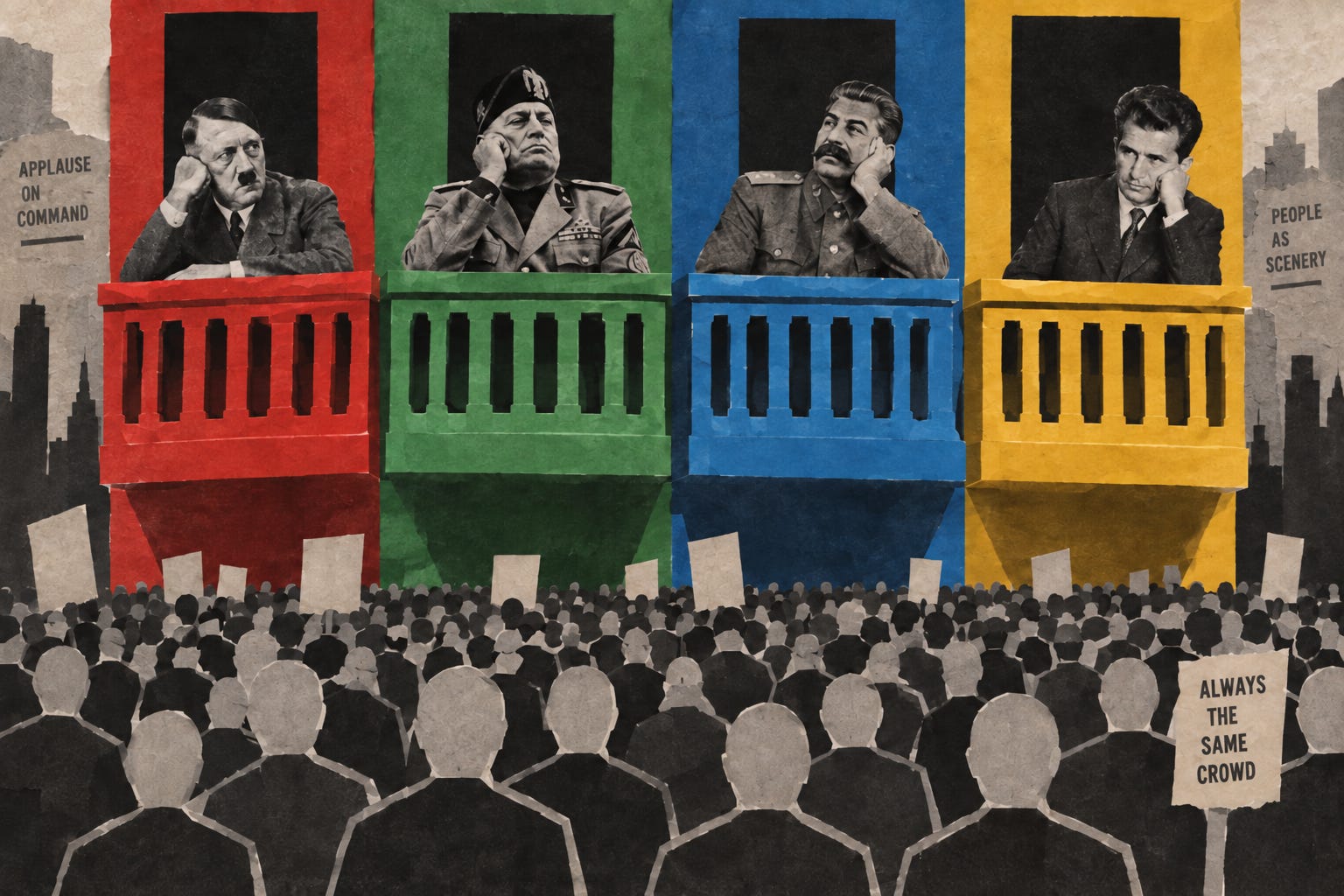
Before social media, there was the balcony
Pour something large. We’re going to Bucharest…
It is December 21, 1989. Communism is collapsing all over Eastern Europe, Romania is miserable, and people have been shot in Timișoara. About this time, Nicolae Ceaușescu decides that what the country really needs is another opportunity to applaud Nicolae Ceaușescu.
Fortunately, he has a balcony for this.
Ceaușescu loved his balcony. Dictators always do.
High above the square outside Communist Party headquarters, the Romanian dictator could look down upon a crowd united in flags, banners, and endless applause. The balcony is basically Instagram Live without the dangerous possibility that somebody named @FuckNicolae69 will appear in the comments.
And Ceaușescu had done this routine plenty of times. The balcony jutted from Communist Party headquarters over the enormous square below, giving him the perfect dictator’s-eye view of Romania — tiny people, enormous leader. It was a very flattering perspective.
There was only one small problem — reality. The Romania that Ceaușescu saw from his balcony was not exactly Romania.
It was Balcony Romania.
Balcony Romania adored him. Balcony Romania loved socialism. Balcony Romania was thrilled about the shortages. Balcony Romania apparently considered standing outside in December holding an enormous portrait of Nicolae Ceaușescu a delightful way to spend a Thursday.
That was until the December 21 rally.
Then, something changed.
It started with the usual hijinks. Workers and members of official organizations were bused into central Bucharest. They were given banners, told where to stand, when to clap, and what to sing. The whole performance was broadcast live on Romanian television.
And so, around noon, Nicolae stepped onto his balcony for another refreshing glass of public adoration. There he was, with his winter coat, his big funny Vlad the Impaler hat, and a great gray sea of applauding humanity spread beneath him.
Ceaușescu began talking about the glorious achievements of Romanian socialism, which was an interesting topic because many Romanians had recently experienced those achievements as food shortages, cold apartments, and the secret police. So far, so good.
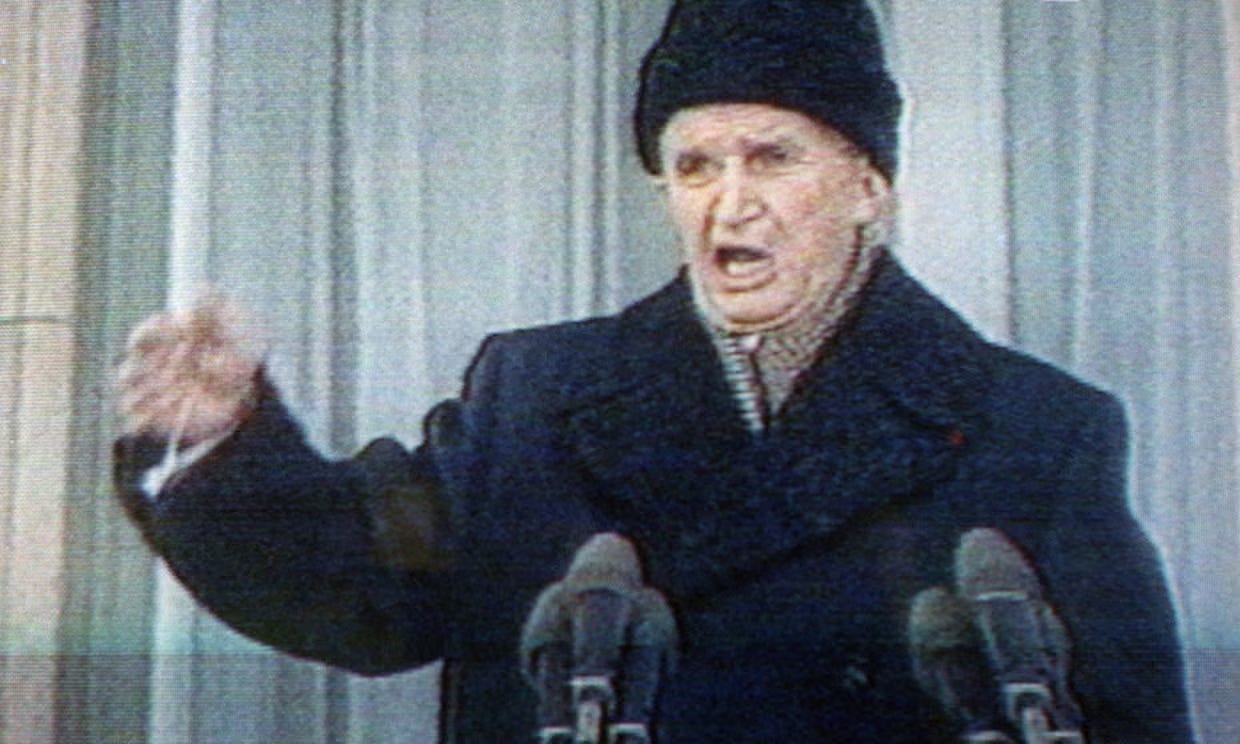
Then Ceaușescu condemned the unrest in Timișoara.
The crowd listened. He kept talking.
And then…something went horribly wrong.
A sound rose from the square.
Ceaușescu stopped.
This was not one of the approved sounds. There were applause sounds, patriotic chanting sounds, and possibly Long Live Ceaușescu, Light of the Carpathians sounds.
This sound was different.
People were heckling him — whistling and shouting. The enormous human wallpaper beneath the balcony had begun expressing… opinions. On live television.
Watch the footage. It is one of history’s great facial expressions.
Ceaușescu freezes. His mouth hangs slightly open. His hand comes up as though perhaps the Romanian people are a malfunctioning toaster and he can get them working again by pressing the lever.
“Alo?”
He tries again.
“Alo, alo.”
Hello?
Hello, Romania?
Are you still there?
Romania was there. That was the problem.
For perhaps the first time in decades, Ceaușescu was hearing from the Romanian people without somebody screening the call.
But the truly extraordinary part of the footage isn’t the booing. It’s Ceaușescu’s bewilderment. He looks less frightened than…nonplussed.
Because why wouldn’t he be? For years the entire Romanian state had functioned like one enormous customer-service department whose principal customer was Nicolae Ceaușescu. Newspapers, television, and party officials told him Romania was thriving. Crowds were assembled to demonstrate how thrilled everyone was about all the thriving.
And anyone tempted to mention that perhaps life wasn’t so grand would lose their job or possibly more.
Ceaușescu had built himself the perfect disinformation echo chamber.
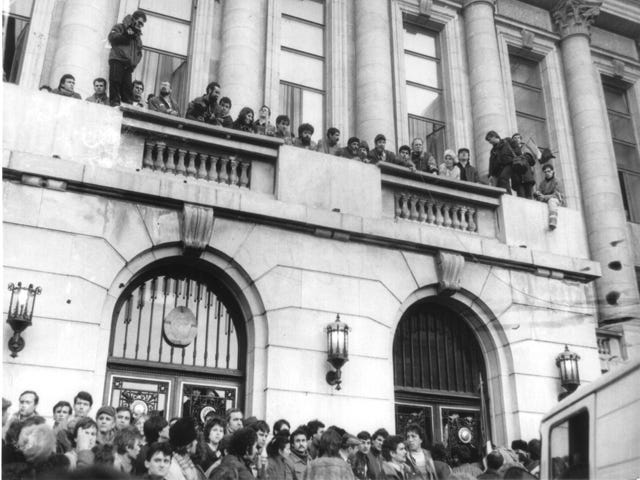
The following day, demonstrators poured into central Bucharest. Ceaușescu tried the balcony again. Of course he did. When your emotional-support balcony has worked for twenty years, you don’t abandon it after one bad Yelp review.
But the spell was gone.
Within hours, Nicolae and Elena Ceaușescu were fleeing the Communist Party headquarters by helicopter.
Three days later, after a summary military trial, they were executed.
Now, this is the moment where history tempts us into learning the wrong lesson. The takeaway is not: Dictator unpopular. Crowd boos. Dictator falls. The end.
Pleeeeease. That is not how we roll at the Grim Historian. History is rarely considerate enough to provide same-day service. Ceaușescu’s ending was unusually fast. The more interesting arc is what happened before the ending.
For years, his government had gotten progressively better at controlling what the public could say. And therefore progressively worse at knowing what the public thought.
But that is the authoritarian bugaboo. Silence the critics, fire the pessimists, punish the messenger, fill the square with supporters, and stand on the balcony. Look down and marvel at your popularity. Eventually, you conveniently forget that the applause are pre-arranged.
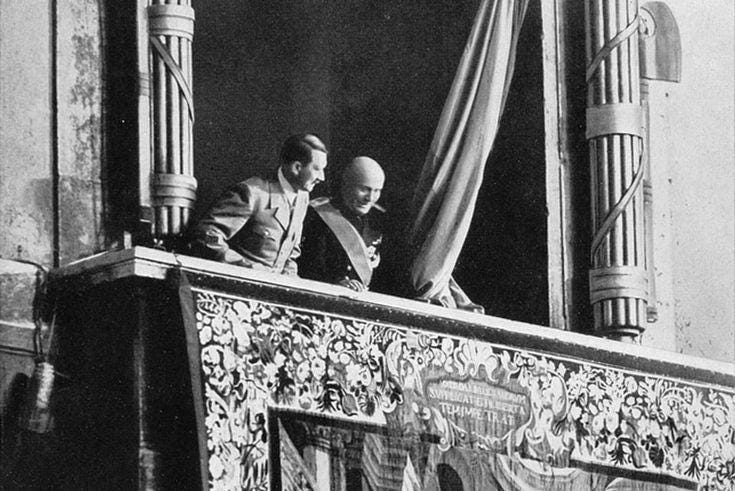
History has other examples of dictators who couldn’t read the emptying room. I would be remiss if I left out the other famous balconies.
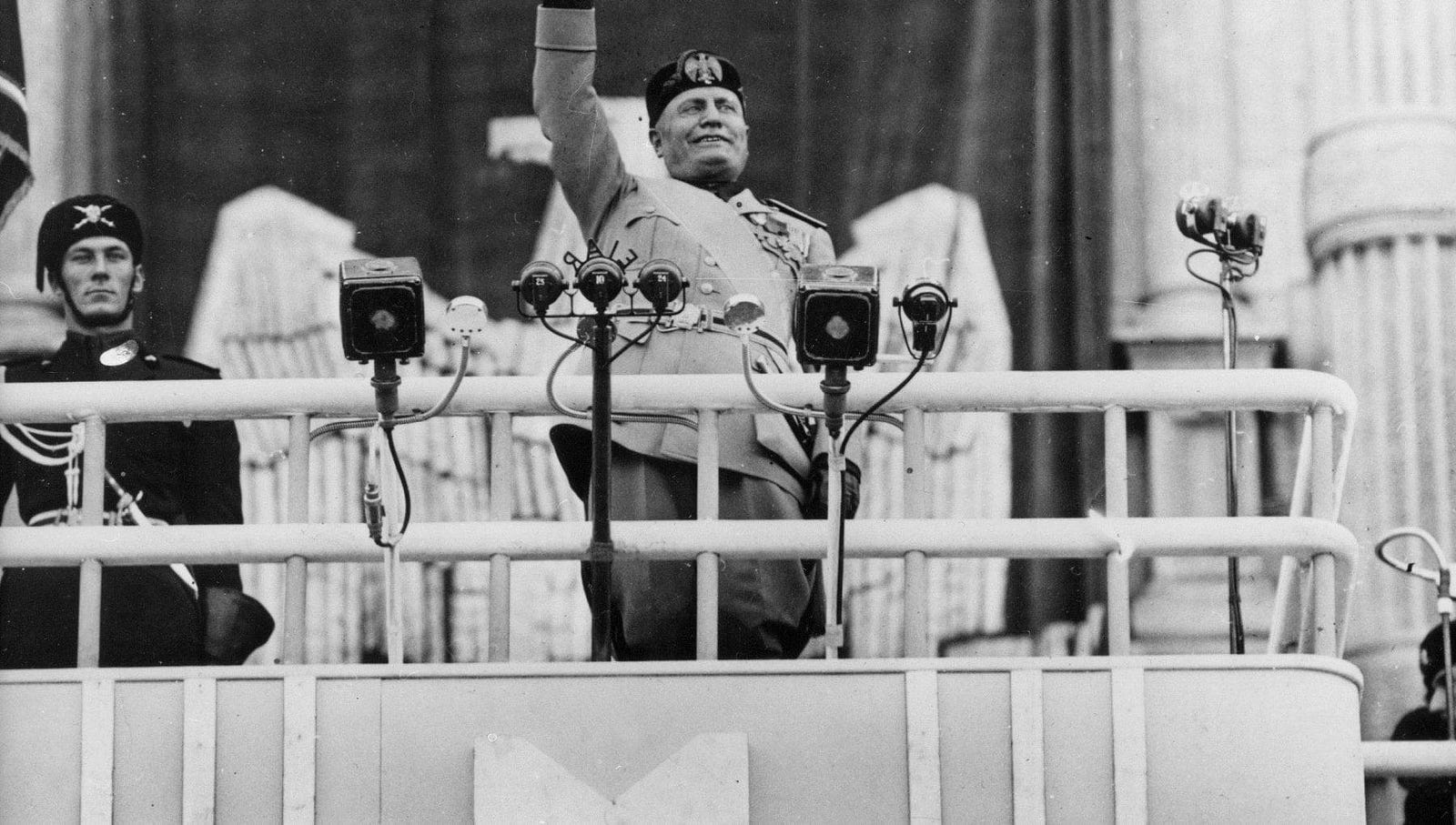
Mussolini understood the balcony immediately. From Palazzo Venezia in Rome, Il Duce could puff out his chest, jut out his chin, and address enormous crowds packed into the square below. The building became part of the Fascist propaganda machine precisely because its balcony provided such magnificent political theater. Until it didn’t.
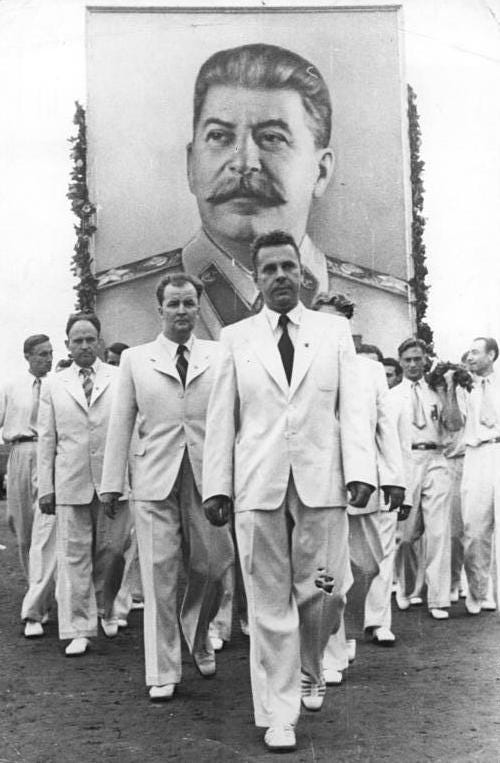
Stalin’s balcony was fear itself. He built a system so terrified of displeasing him that, when he suffered the stroke that killed him, members of his household staff later said they hesitated for hours before entering his room because disturbing Stalin without permission could be dangerous.
Imagine becoming so powerful that people are afraid to check whether you’re dead.

Modern leaders can use rallies, friendly media, loyal institutions, or social-media feeds that filter out criticism before it reaches them. The medium changes, but the function remains the same. Simply create enough distance from ordinary people that the ruler can mistake managed information for genuine approval.
In other words, stand far enough above the public that you can no longer hear what they are saying.
Then mistake the silence for love.
Reality and the rest of the world check the polls
Let’s now leave the balcony for a moment and check in with the people standing underneath it.
Because Trump keeps insisting that unfavorable polls are fake, and the polls, rather rudely, keep polling.
At the end of August, Reuters/Ipsos put Trump’s job approval at 33 percent, tied for the lowest level of either of his presidencies in that polling series. A University of Massachusetts Amherst poll released the same day found 32 percent approval and 64 percent disapproval. Economist/YouGov, surveying Americans August 28–31, found 33 percent approving and 62 percent disapproving.
To be clear, Trump’s dropping popularity does not mean he is destined for a Ceaușescu ending. History does not offer that warranty. It means the balcony is sending back information he publicly rejects.
However, the rest of the world does not have to believe the balcony.
It has spreadsheets.
In 2025, Dutch pension funds sold a net €30 billion in U.S. securities, including €18 billion in bonds. ABP, Europe’s largest pension fund, went further. Its holdings of U.S. government bonds fell from about €29 billion to €4.6 billion in roughly eighteen months, while more of its portfolio shifted toward Europe.
Then the Dutch central bank moved 86 tonnes of gold out of New York and Ottawa to London.
Its own explanation was wonderfully bloodless: “increasing geopolitical unrest,” better crisis preparedness, better access to reserves in an emergency.
Of course, central bankers rarely say Holy shit, everybody grab the gold.
They say risk diversification.
Speaking of diversification…Norway’s $2.3 trillion sovereign wealth fund has now proposed cutting roughly $80 billion from its U.S. Treasury exposure as part of a broader overhaul designed to diversify its bond portfolio.
Eighty billion dollars is a fairly expensive way of saying perhaps we shouldn’t keep all our eggs in this one precious American-made tariffed basket.
China has been conducting its own slow-motion diversification for years. U.S. Treasury data show mainland China’s holdings falling from about $731 billion in June 2025 to $633 billion in June 2026. Meanwhile, China’s central bank added nearly 20 tonnes of gold in July alone, its largest monthly addition since 2023 and part of a continuing gold-buying streak.
Canada isn’t loading bullion onto a truck. It is looking for customers. Prime Minister Mark Carney has explicitly described diversifying Canada’s partnerships abroad as a national strategy. And the numbers are beginning to move: the U.S. share of Canadian exports fell from 73 percent to 68 percent year to date, while exports to non-U.S. markets rose.
Zoom out even farther, and the pattern becomes harder to dismiss. In a 2026 World Gold Council survey, 74 percent of central-bank respondents expected the U.S. dollar to make up a smaller share of global reserves five years from now. A separate survey of 90 central banks, sovereign funds and public pension funds found, for the first time, more institutions planning to reduce dollar holdings over the coming decade.
To be clear, this is not a run on America. Total foreign Treasury holdings actually rose 2.3 percent over the year, which sounds reassuring until you check who was buying. Private investors piled in while the central banks were net sellers. But that is precisely the point. Countries do not need to declare the United States doomed before they hedge against American risk.
Pension funds do not wait for the balcony to collapse. Central banks do not need a revolution in the square. Trading partners do not stand around eating popcorn while America becomes as predictable as Caligula’s horse.
They diversify.
Quietly.
A little gold moves to London. A few billion leave Treasuries. A Canadian company finds another customer. A sovereign fund changes its benchmark. Nothing dramatic enough to interrupt the Trump rally.
Until one day, Americans look down from their own balcony and discover that while we were arguing about whether the crowd was cheering, everyone else had been finding another place to put their money.
The crumbling balcony
We keep watching the performance — the rallies, the posts, the meme coins, the merchandise, the ridiculously expensive monuments. We try to ignore Trump’s fantastical declarations that everyone is winning, that the polls are fake, and the critics are liars. But the rest of the world doesn’t have to play along.
They can simply leave the crazy behind.
Not all at once. That would be dramatic. History usually gives you something quieter — a bond sold here, a bar of gold moved there, a new trade agreement signed somewhere else.
One exit at a time.
So that by the time the ruler hears the booing, everyone else has already moved their chairs.

Carlyn Beccia is an award-winning author and illustrator of 13 books. The Grim Historian is a reader-supported publication. To receive new posts and support my work, consider becoming a free or paid subscriber.
Clearly, market forces offer a safety valve, such that the balloon slowly deflates rather than going bang one day as per the classical balcony dictator. Or might there still be a day of crisis if the USA loses its "exorbitant privilege," its reserve-currency status, as a result of this leakage? Going bankrupt slowly at first, then all at once, as the old F Scott Fitzgerald saying goes. That thought might make for an interesting follow-up.
I was in Romania shortly after Ceausescu fell, and it was the most depressing place I have ever visited, before or since. I was on a film shoot and got friendly with the young staffers, who were dying to get out but couldn't--nobody had any money. The whole economy was depressed, the Ceausescus were gone, but the oligarchs directly under him had just move up to take up where they had left off. The kids had fought in the "revolution" but nothing had changed, they were ambitious, but stuck. The clearest indicator of societal collapse was the dead horse in the road by the driveway to the hotel we stayed in, which had been the headquarters of the secret police. The dead horse had lain there since we arrived, and the smell of it decomposing wafted into the dining room whenever the wind changed. It was summer, and there was no air conditioning, and the less said about the quality of the food served the better. In the years since I sometimes wonder what happened to the people I met, if things turned out alright in the end. We left after about 10 days, the film didn't work out, but we did get to go to Snagov island to roam the little church where Vlad the Impaler's head is buried, being rowed across the lake by an old lady wearing a babushka. You could see the Ceausescu's former summer villa on the other side of the water. Just like in the book, the name of which I can't recall at the moment...