



Grim Reminder: A Grim Historian is a reader-supported newsletter and depends on your 5$ donations to keep the most depressing politics and history in your inbox. Please consider becoming a paid subscriber or sharing with someone who loves misery.
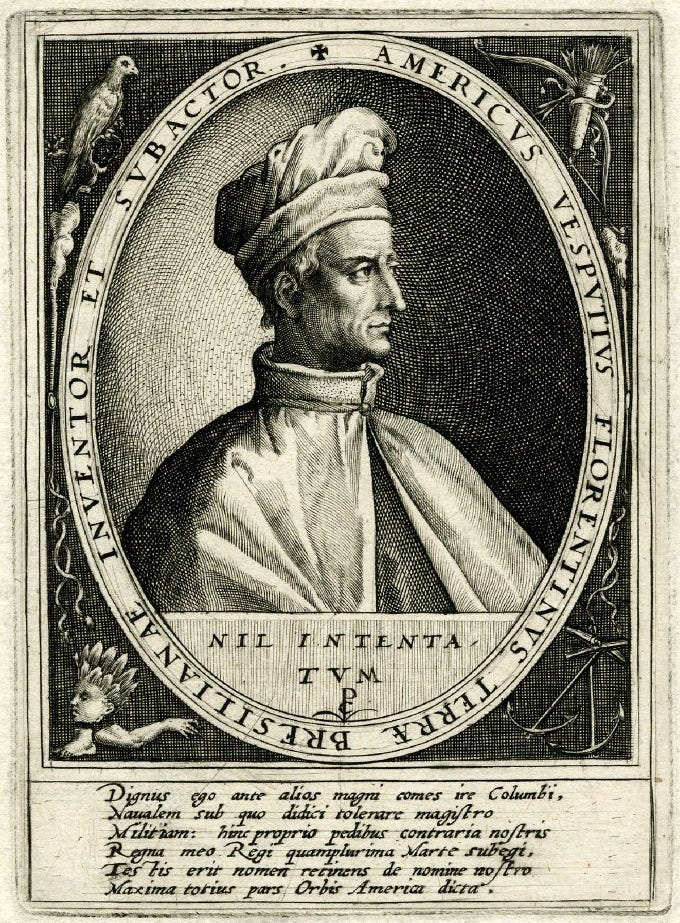
America is named after an Italian who worked for the Medici, so right away you know the man demanded respect.
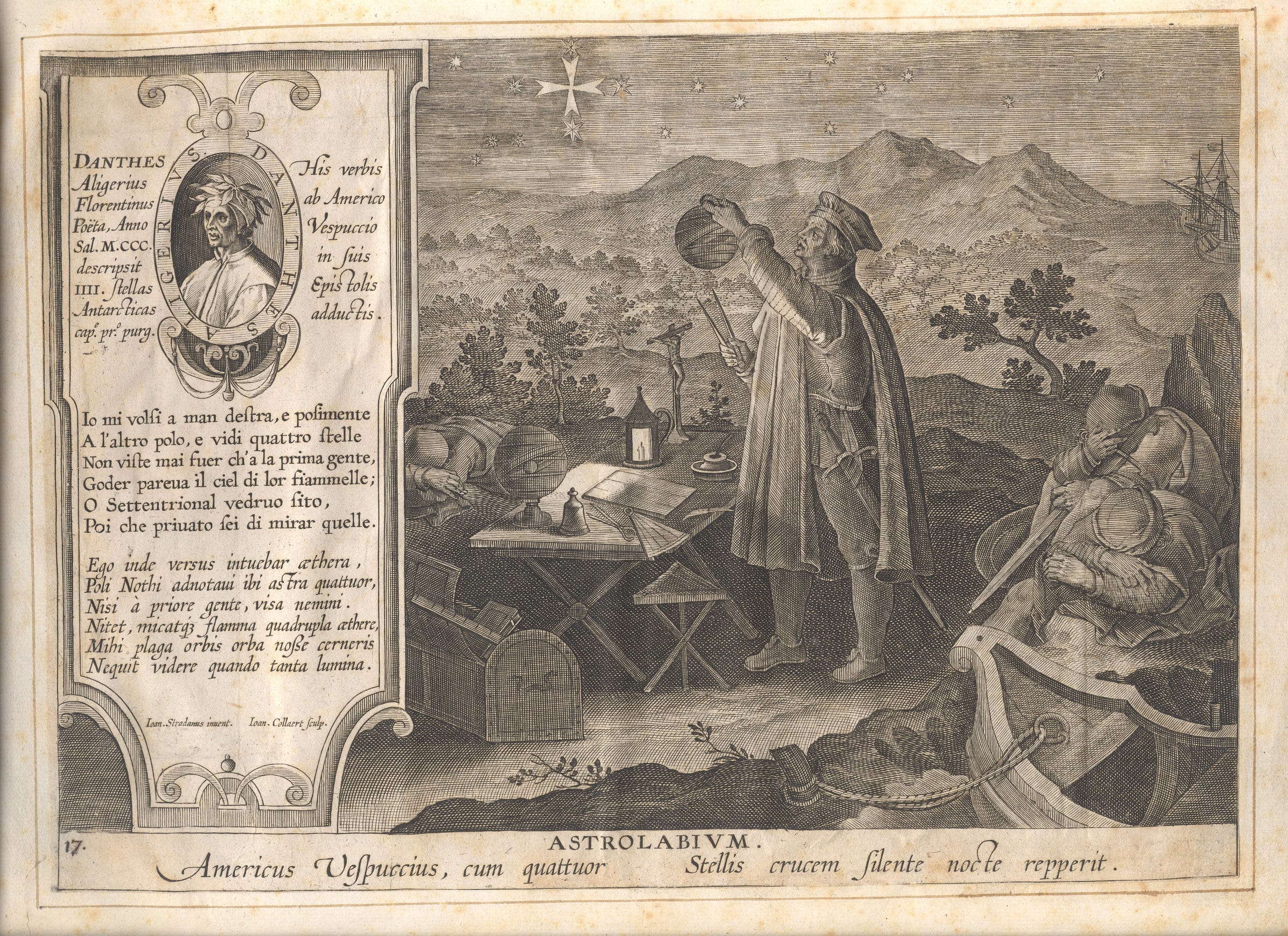
Amerigo Vespucci was a Florentine merchant, navigator, and eventually Spain’s chief map nerd, whose great contribution to Western civilization was looking at the enormous landmass Europeans kept bumping into and saying… Guys, I don’t think this is Asia.
This turned out to be a very good career move.
Normally, you don’t get naming rights until you’ve accomplished something first. Trump appears to believe owning a Sharpie is close enough.
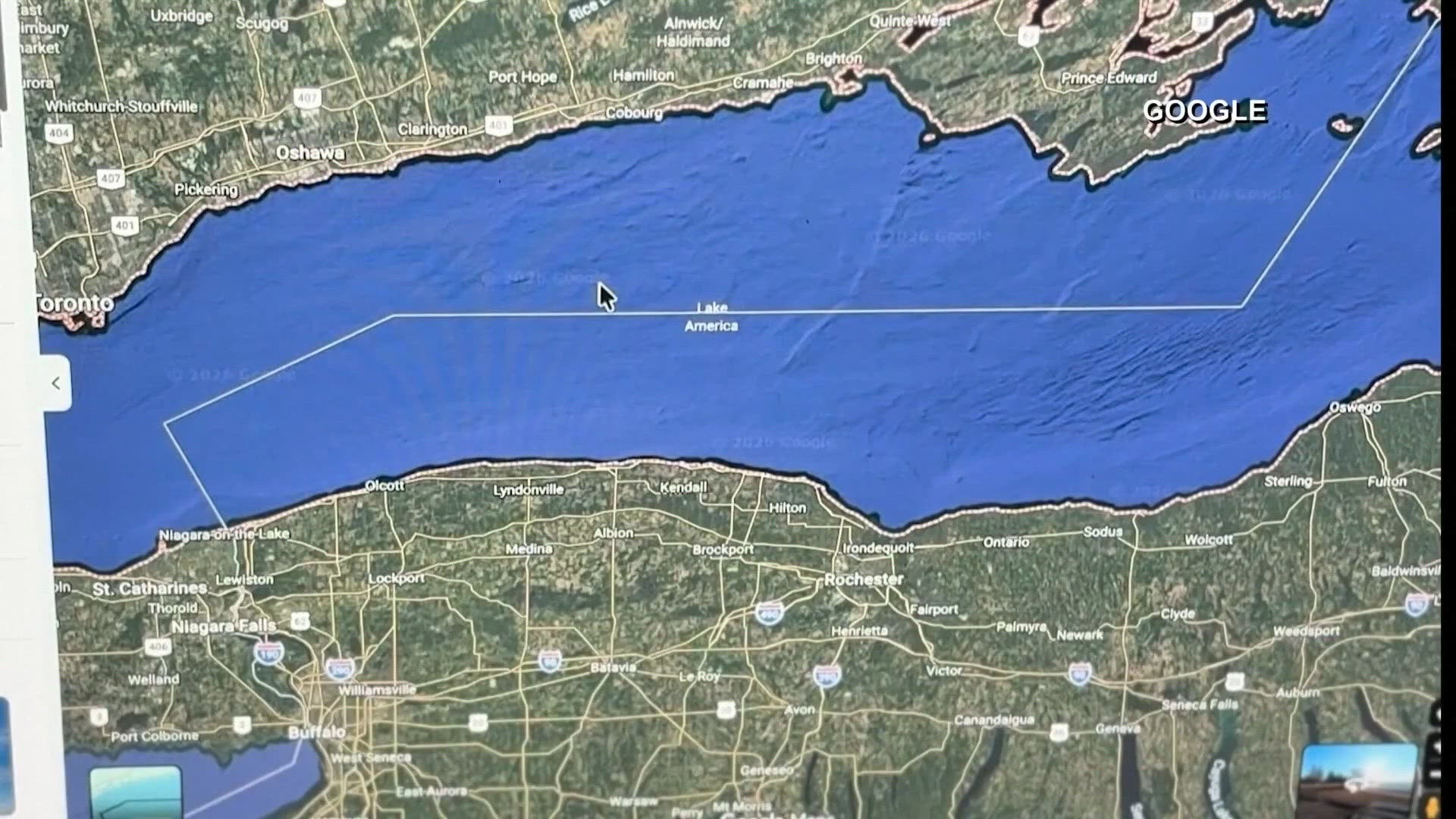
On August 27, Trump signed an executive order directing the federal government to replace Lake Ontario with “Lake America.”
Two days earlier, trade talks between the U.S. and Canada collapsed, and Trump said he was considering Lake America because the United States didn’t expect to be doing much business with Ontario anymore.
No one knows when a Trump tantrum is coming. Maybe he is still mad about Justin Trudeau’s really cool socks. Maybe Mark Carney’s ability to form a coherent economic thought has become intolerable. Who knows.
It doesn’t really matter because naming something is cheap. Governing is hard.
Which brings us back to my boy, Amerigo…
How America became America, by accident
Christopher Columbus reached the Caribbean in 1492 and proceeded to spend the rest of his life insisting he had found a western route to Asia.
This was inconvenient because he had not.
Amerigo Vespucci came along later and argued that these lands represented an entirely different part of the world. His accounts of his 1501–1502 voyages helped persuade European scholars that they were looking at a separate continent rather than some stray appendage of Asia.
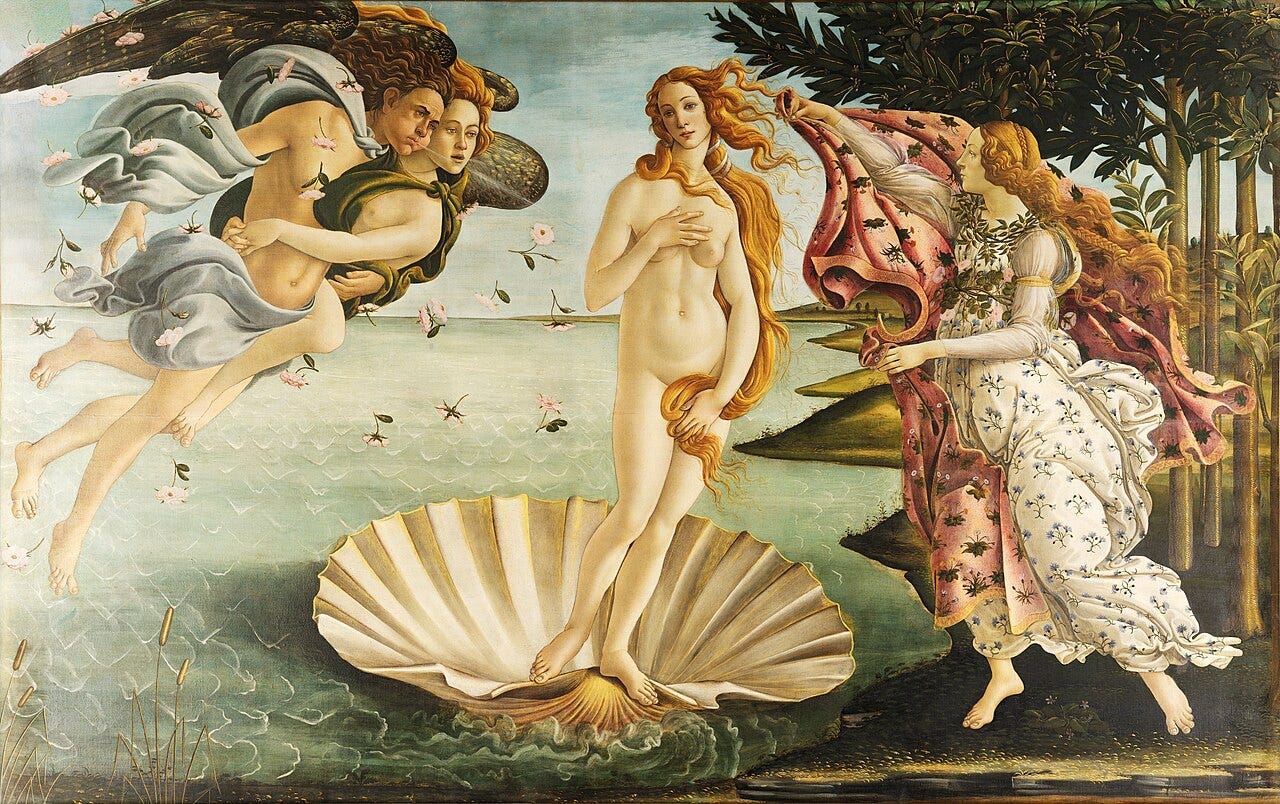
Now, Amerigo had several advantages over Columbus in securing my personal loyalty. First, he wasn’t a genocidal maniac. Second, he was a Florentine who survived employment with the Medici. That’s basically like making it through The Godfather trilogy while remaining on speaking terms with the Corleones. Third, Simonetta Vespucci — the legendary Florentine beauty traditionally associated with Botticelli’s The Birth of Venus — married Marco Vespucci, a distant cousin of Amerigo. Did Columbus have a really hot cousin-in-law who may have inspired one of the greatest paintings in history? I rest my case.
Besides, Columbus’s name already survives in Colombia, the District of Columbia, British Columbia, the Columbia River, Columbus, Ohio, Columbia University, and enough American streets to ensure the little grifter never lacks parking. He’ll be fine.
More importantly, Columbus died in 1506. He never even got to see himself lose the continental naming rights.
One year later, Martin Waldseemüller and a small circle of scholars in Saint-Dié produced a spectacular twelve-sheet world map incorporating the latest information from the voyages. It was the first known map to depict the Western Hemisphere clearly separated from Asia.
Across what we now call South America, Waldseemüller printed one little word:
AMERICA.
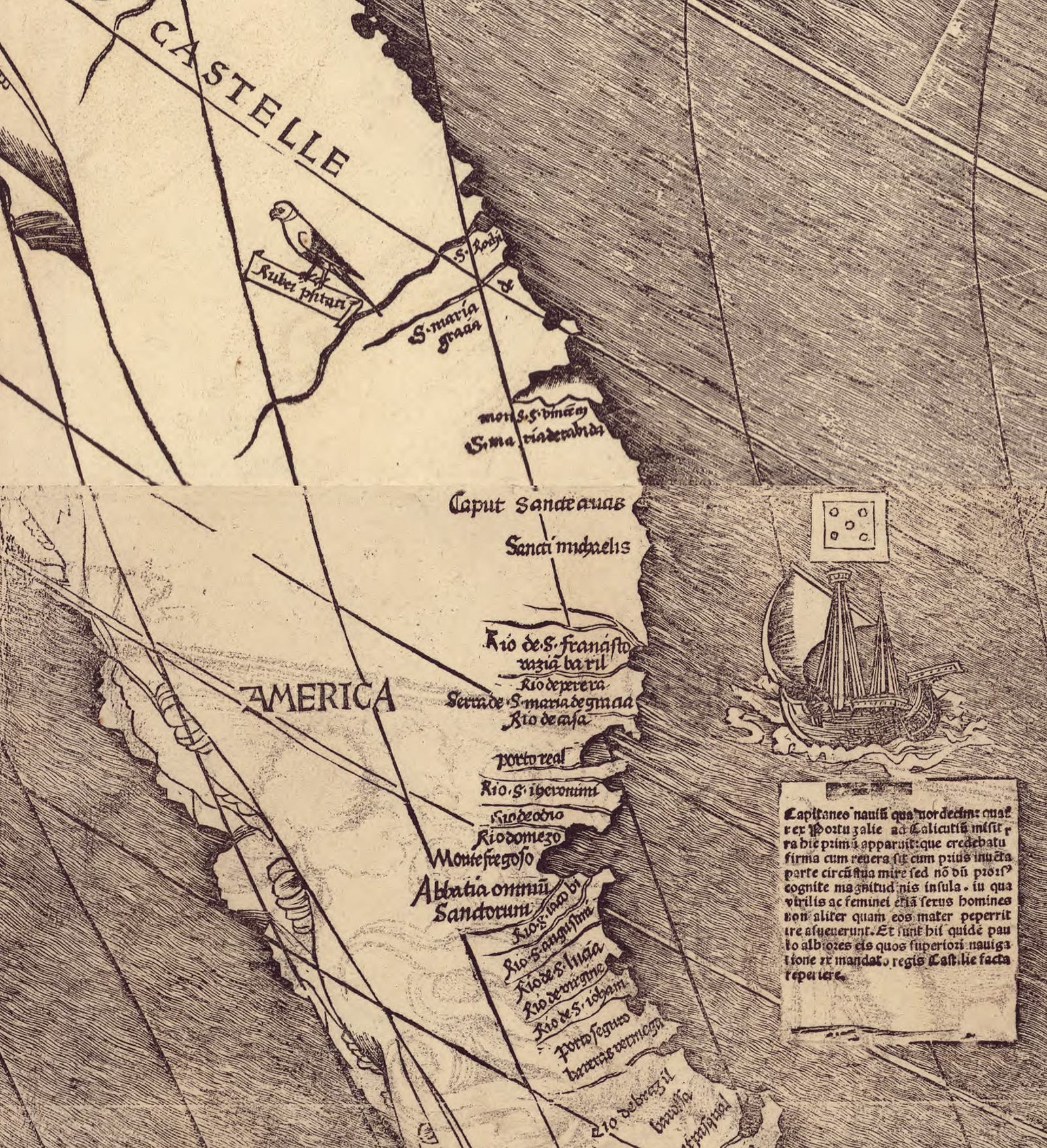
The accompanying Cosmographiae Introductio explained the reasoning. Amerigo had recognized this as a fourth part of the world, so why not name it for him? Amerigo became the Latin Americus, which became the feminine America.
And that was pretty much it.
No international naming commission. No referendum. No executive order. Some Renaissance map nerds made an editorial decision.
Then Waldseemüller changed his mind.
By 1513 and 1516, he had dropped America from his maps, replacing it with names such as Terra Incognita and Terra Nova.
Too late, Marty.
Other cartographers — including Johannes Schöner and Peter Apian — kept using America. Then in 1538 Gerardus Mercator made the decisive expansion, applying the name to the northern continent as well as the southern one.
Amerigo Vespucci had somehow won two continents without entering the contest.
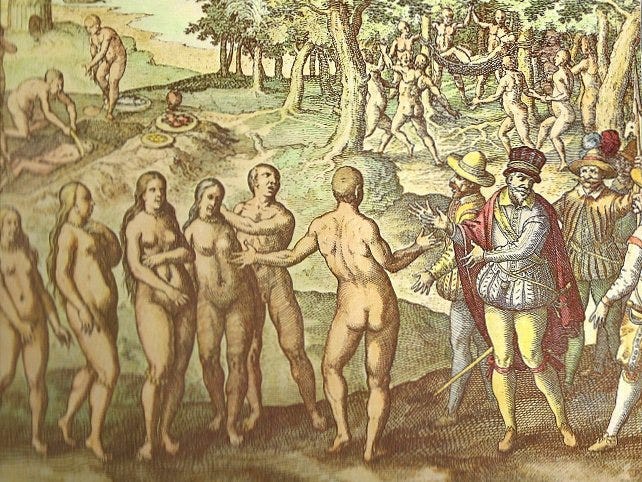

That is also how names become real. Someone proposes them. Someone else repeats them. A map prints them. Another map copies them. People begin using them.
Eventually everyone forgets there was ever a choice.
Who died and made Google king cartographer?
On August 29, Google Maps began showing American users “Lake America” instead of Lake Ontario. Google says it is following its longstanding practice of reflecting the U.S. government’s Geographic Names Information System. Canadians still see Lake Ontario. People elsewhere may see both names.
That sounds wonderfully bureaucratic. We didn’t rename anything. We merely updated the database.
Suuuuuure.
Maps are editors of reality. Martin Waldseemüller’s map did not merely record a name everyone was already using. His map helped create the usage. The Library of Congress calls the 1507 map “America’s birth certificate” for precisely that reason.
Google has infinitely more power over common geographic language than Waldseemüller ever dreamed possible. Millions of people carry its maps in their pockets. Businesses embed Google maps on their websites. Search results reproduce its terminology. Directions and screenshots reproduce it. Obviously, after Google made the change, Canadian government-linked sites that relied on Google’s mapping technology suddenly began displaying the Trump name themselves.
That is how an executive order grows legs. Trump calls it Lake America. Then the federal database calls it Lake America. Google bends the knee and calls it Lake America. Websites call it Lake America. People start saying Lake America. And eventually someone shrugs and says…
Well, that’s what everybody calls it.
No. That is what normalization looks like while it is happening.
Other mapmakers had a choice. MapQuest made the correct one. After Trump’s executive order, the 30-year-old mapping service posted a map still labeled Lake Ontario with three beautiful words, “We’re not changing it.”
And something extraordinary happened.
People downloaded MapQuest.
By today, it had become the №1 navigation app in Apple’s U.S. App Store, while usage surged to roughly 50 times its normal rate.
I was one of them. Today, I used MapQuest to get to my doctor’s appointment. And I have exciting news from the technological frontier of 1999…
It works.
It works exactly like Google Maps. Directions appeared. A little arrow showed me where to turn. I arrived at the correct building. Nobody handed me a stack of MapQuest pages fresh from an HP DeskJet and told me to reset the trip odometer. We have apparently had alternatives this entire time.
Now, I know some of you might be thinking — Ms. Beccia, why are you wasting anger over a little man in his petty sour grapes governing?
Let me explain, as my hands calmly gesticulate my inner rage. I have written before about what I call the Naked Man Doctrine. The guy takes off his pants and sits on your couch, and everyone wastes time debating whether the situation is serious enough to make a scene.
Meanwhile, there is a naked man on your couch who has just learned that nobody is going to make him put his pants back on.
Lake Ontario is another naked Trump sitting on our couch. (Sorry for the imagery.)
Trump does not need this name. America receives no economic benefit from it. The lake does not become more American. Canada does not become less Canadian. Ships do not travel faster. Fish do not become more patriotic.
The value is in getting everyone else to behave as though his declaration changes reality.
The absurdity is the test.
Will the federal agencies comply?
Yes.
Will corporations comply?
Google did.
Will Apple? Trump has reportedly called the company personally about that one. As of this writing, Apple has not made the change.
Will we comply? That part remains undecided.
We have more power than we think
Last year ABC suspended Jimmy Kimmel amid political pressure. Consumers protested and canceled Disney+ and Hulu subscriptions.
ABC put Kimmel back on the air six days later.
We cannot say consumer cancellations alone caused Disney’s reversal. But reporters covering the company said the speed of the reversal had a great deal to do with the internal and external pressure Disney was receiving. Later data showed monthly cancellation rates for Disney+ and Hulu doubled during the backlash.
Corporations count on your belief that your individual choice doesn’t matter. One canceled subscription doesn’t scare Disney. A million might.
One person downloading MapQuest is nostalgia. Hundreds of thousands of people downloading it in a weekend gets somebody’s attention.
This is how collective power always looks from ground level.
And perhaps no story proves that better than the name of our own country.
Martin Waldseemüller printed America. Other people had to keep printing America. Mercator had to adopt America. Readers had to learn America. Generations had to repeat America until the editorial choice of a German cartographer became so permanent that today we cannot imagine calling two continents anything else.
Google should know better than anyone that maps have that power.
So use MapQuest. Use another map that still says Lake Ontario. Write and say Lake Ontario. Laugh at Lake America.
And when someone tells you this is silly because we have bigger problems, tell them the smallness of the demand is exactly the point.
Power does not arrive only with tanks and laws and men kicking down doors. Sometimes it arrives as a tiny change in a database and waits to see whether everyone will quietly update their vocabulary. The Nazis understood this perfectly well. They started renaming streets and squares almost as soon as they took power in 1933.
An authoritarian can order a new name onto any map. Only the rest of us can make it stick.
I really miss the Gilded Age villionaires. They were robber barons, union busters, monopolists, and assorted bastards, but at least they understood the basic etiquette of putting your name on shit.
You had to build something first.
Carnegie wanted his name everywhere, so he helped build 2,509 libraries. Cornelius Vanderbilt gave $1 million to found and build a university. John D. Rockefeller Jr. financed Rockefeller Center, and turned it into one of the largest private construction projects in the country. Then they got their names on things.
Trump skips the work.
He doesn’t build a new national cultural center. He slaps his name on the Kennedy Center. He renames the Department of Defense to the Department of War, and then proceeds to spectacularly lose a war with Iran. He doesn’t create a new gulf. He renames the Gulf of Mexico. He doesn’t discover, purchase, build, improve, or otherwise do a goddamn thing. He just steals other people’s fire and changes the nameplate.
Because naming is the cheapest imitation of accomplishment. You get the monument without doing the work that made it worth naming.

Carlyn Beccia is an award-winning author and illustrator of 13 books. The Grim Historian is a reader-supported publication. To receive new posts and support my work, consider becoming a free or paid subscriber.
In ancient times, historians couldn't stop emperors from executing people, but they could at least record the names of the court jesters who were first to kneel.
Google’s spineless compliance in 2026—a company that once preached "Don't be evil"—deserves to be recorded in history. If for nothing else, then simply so future generations know what kind of absurdity we lived through.
Canada maybe missing a trick - they have a Lake Harp in Ontario, which they could rename Lake Natalie.
It's small and shallow.
https://en.wikipedia.org/wiki/Harp_Lake_(Ontario)