


Grim Reminder: A Grim Historian is a reader-supported newsletter and depends on your 5$ donations to keep the most depressing politics and history in your inbox. Please consider becoming a paid subscriber or sharing with someone who loves misery.
After the Russian plague story broke, readers started sending it to me.
A lot of readers.
And I have to admit, it warmed my heart. Sometimes you spend years writing into the abyss and wondering whether anyone remembers a goddamn thing you told them. Then somebody in Siberia possibly dies of plague, and suddenly your inbox fills up.
Really, I’m touched.
Some writers become associated with democracy, foreign policy, or climate change. I have somehow become the woman you think of when somebody mentions exploding buboes. We all leave a legacy.
Unfortunately, this also means I have spent an unreasonable portion of my life reading about plague. One of my books covers the Black Death. I have read the chronicles, investigated flea vectors, and can accurately describe what color your extremities turn when Yersinia pestis gets into your bloodstream.
So when I heard whispers of the next pandemic over an unconfirmed case of pneumonic plague in Russia, I had approximately the same reaction an Italian grandmother has when somebody puts sugar in the marinara.
You want to chat about plague?
Sit down. My people know plague.
The history of plague in two acts
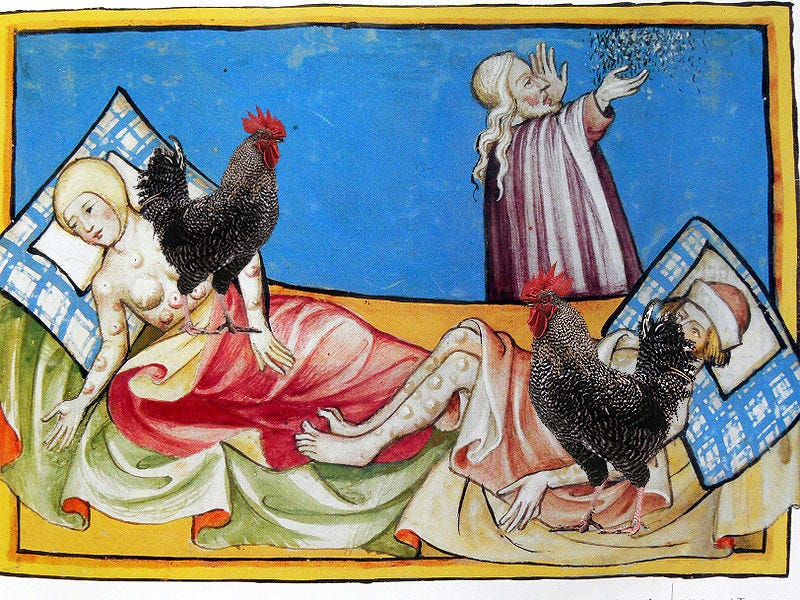
There’s this running history joke between English and Italian historians. Brits love getting their knickers twisted over how badly England suffered during the Black Death.
Boo hoo. Yeah, come to Tuscany, Sir Arthur.
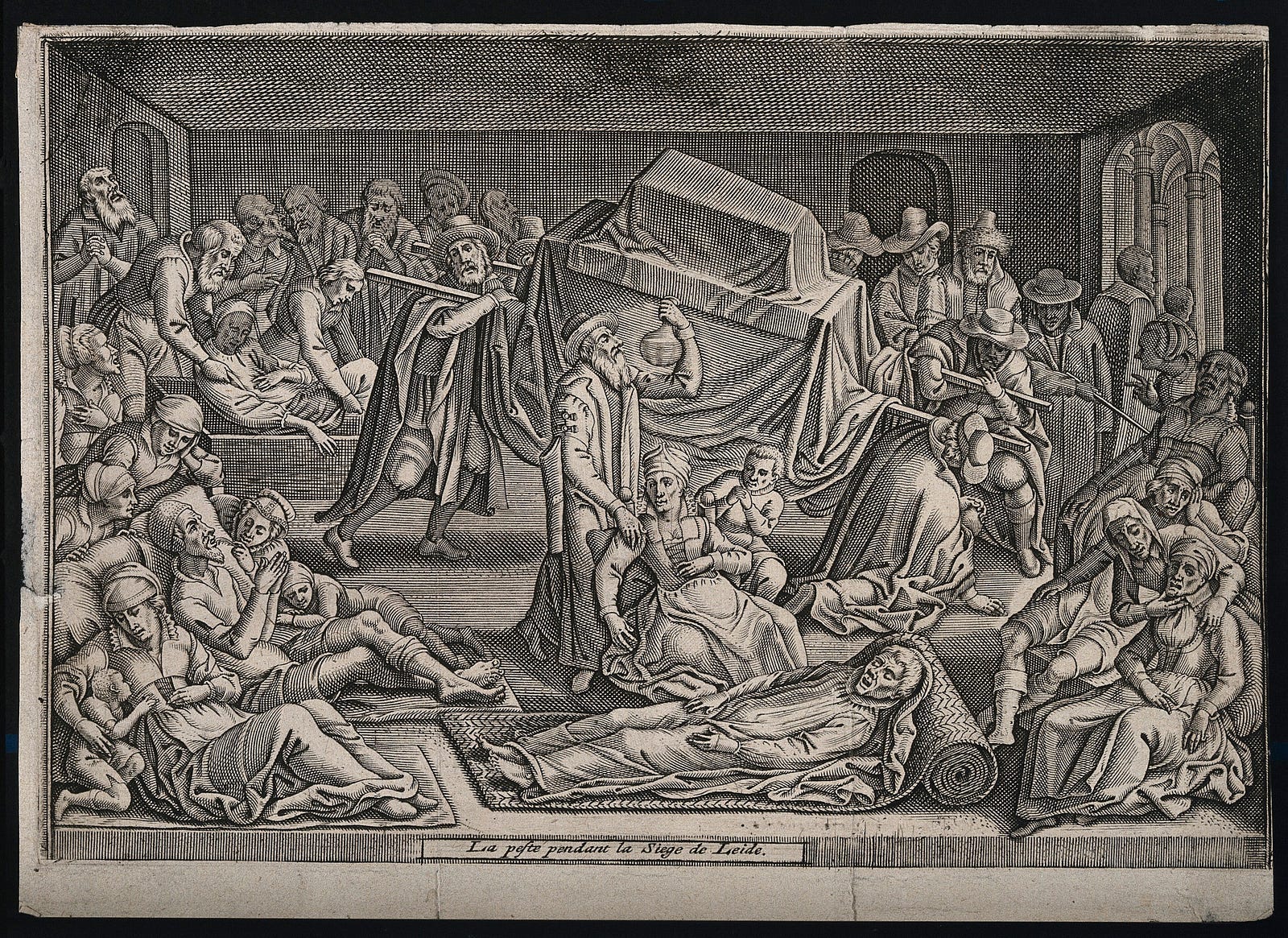
In 1348, plague ran amok in Siena. Its chronicler Agnolo di Tura — wonderfully known as Agnolo the Fat — described people dropping dead while talking, enormous burial pits filling with bodies, and families abandoning one another. Then he quietly recorded that he had buried five of his own children. Modern reconstructions using Sienese military records put the city’s mortality around 51 percent. Florence may have lost more than half its population too. Italians know plague.
And if you read Giovanni Boccaccio’s introduction to The Decameron, written after plague tore through Florence, something else becomes apparent.
When it comes to pandemics, humans are remarkably predictable.
Among the panic, Boccaccio described two Florentine camps. The affluent group shut themselves away in comfortable houses, ate delicately, drank good wine in moderation, listened to music, and avoided upsetting news.
The poor slobs decided that the appropriate response to mass mortality was to roam from tavern to tavern drinking, singing, indulging every appetite, and generally behaving as if tomorrow had already been canceled.
Seven hundred years later, COVID gave one group sourdough starter while the other group said fuck it, we’re going to the bar.
You can bet I would join the bar hopping group.
Fortunately, I don’t have to contemplate doomsday scenarios just yet because medical advice has improved somewhat. And we have antibiotics. Ah, progress.
A visit to plague school
Before I talk everybody off the medieval corpse cart, we need a brief science detour.
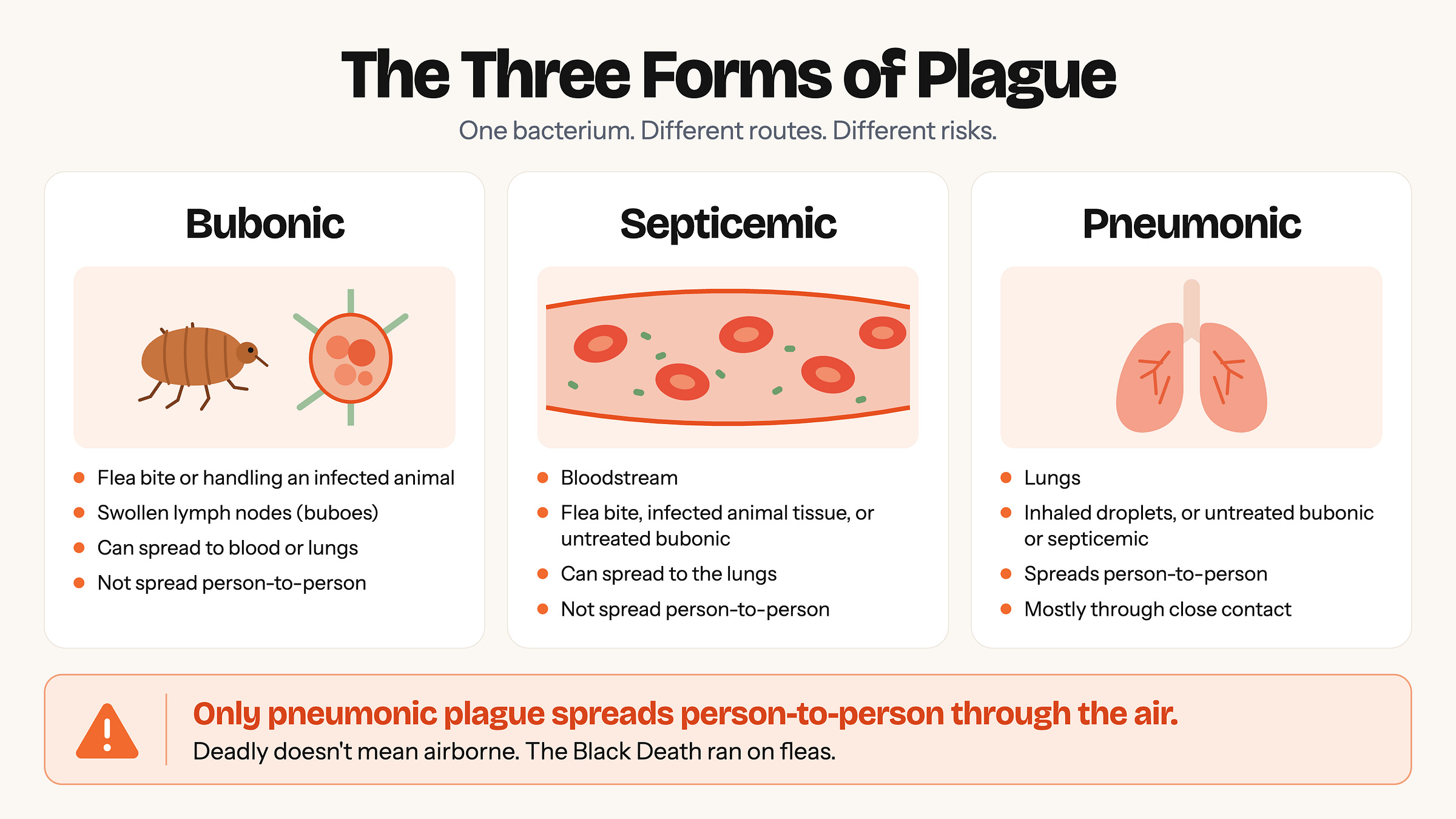
One bacterium causes plague — Yersinia pestis. Bubonic plague, septicemic plague, and pneumonic plague are not three separate diseases roaming around looking for villagers to kill. They describe how the same bacterium ruins your week.
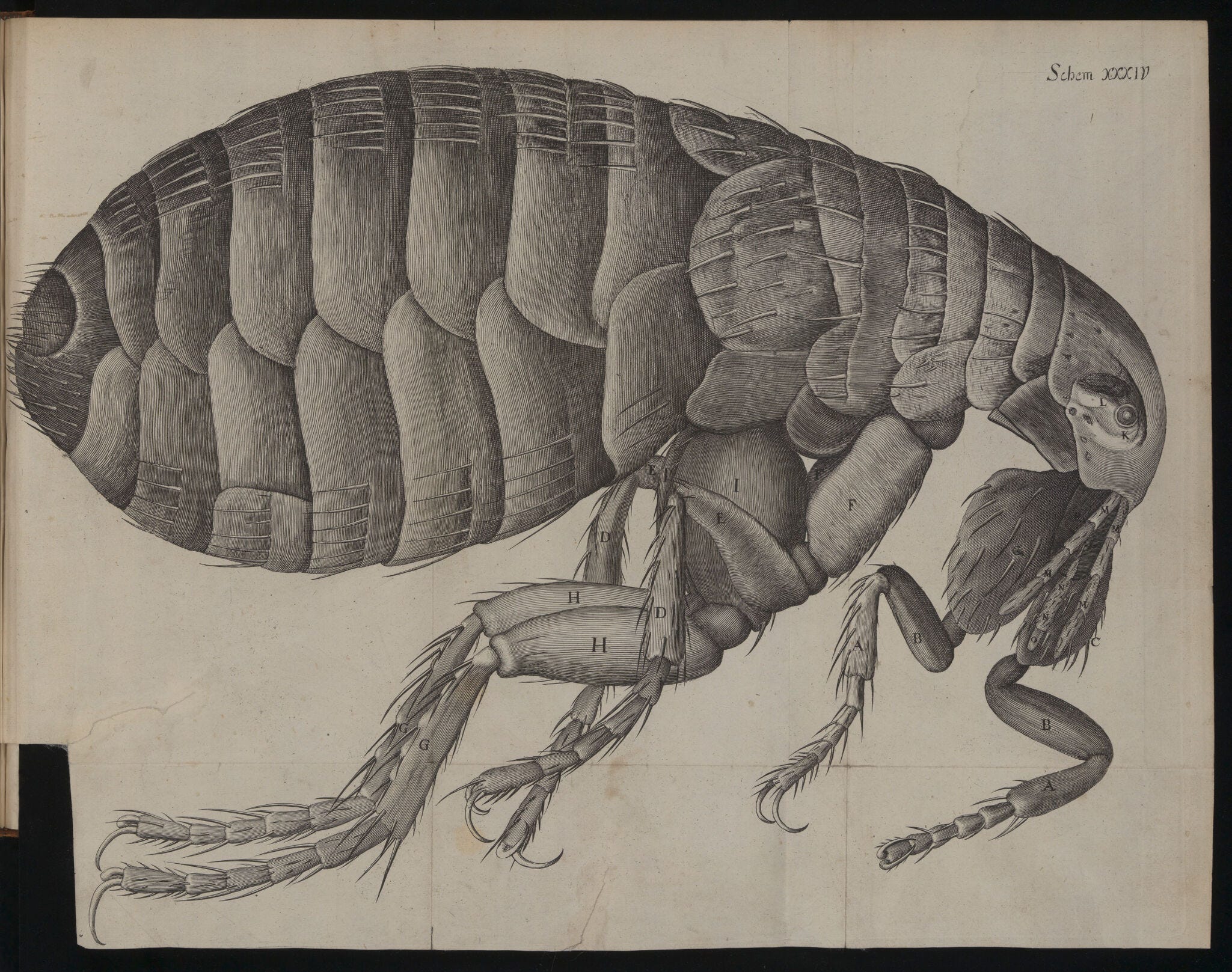
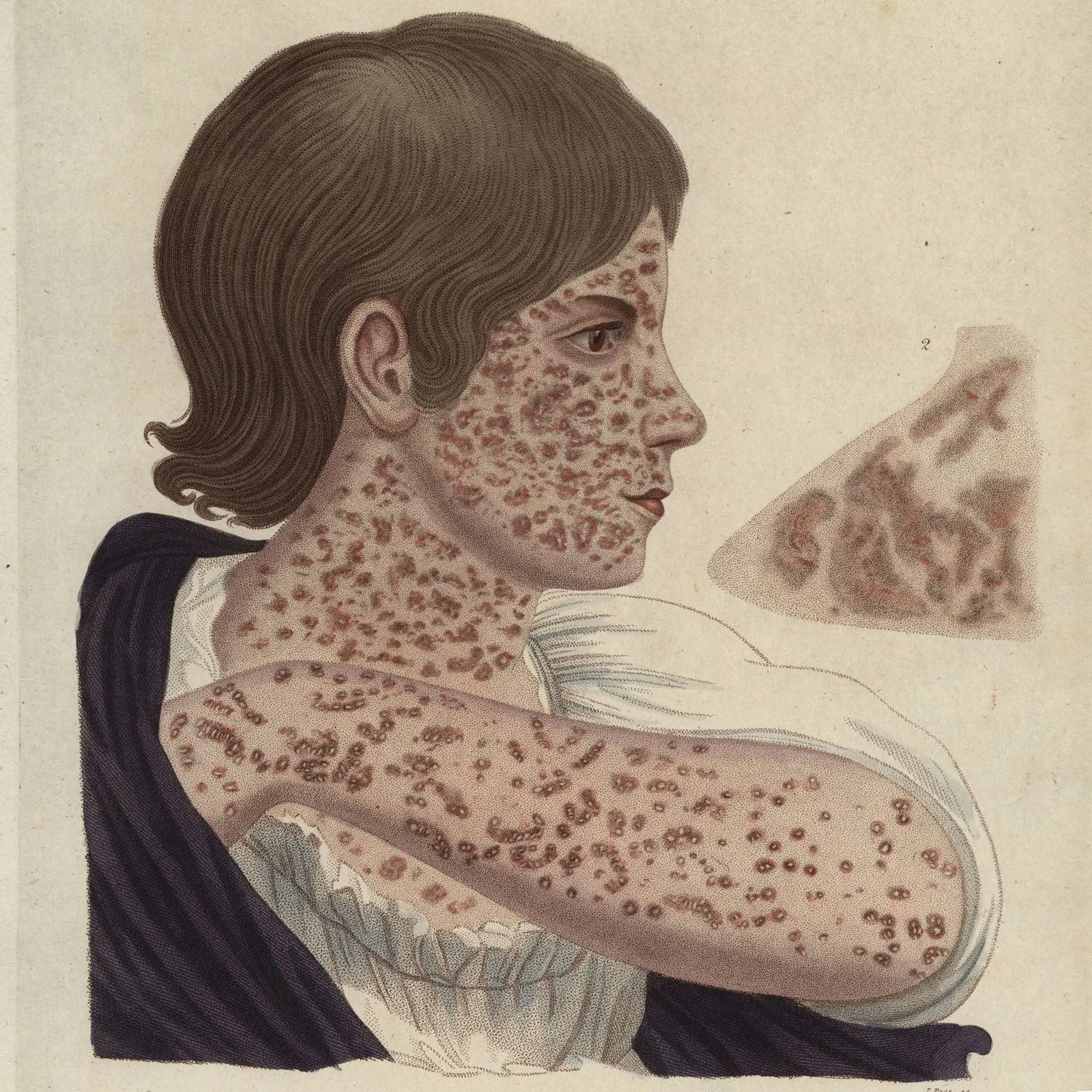
Bubonic plague is the celebrity. Usually, an infected flea bites you. The bacteria move through your lymphatic system and settle into a nearby lymph node, which swells into a painful bubo. Those buboes can grow alarmingly large and, in advanced infections, become open sores filled with pus.
Bubonic plague is also the form Americans still occasionally get. Plague became established among wild rodents and fleas in the rural West after arriving in American port cities around 1900. In recent decades, the United States has averaged about seven human cases a year. More than 80 percent are bubonic, concentrated mostly around northern New Mexico, northern Arizona, southern Colorado, California, southern Oregon, and far western Nevada.
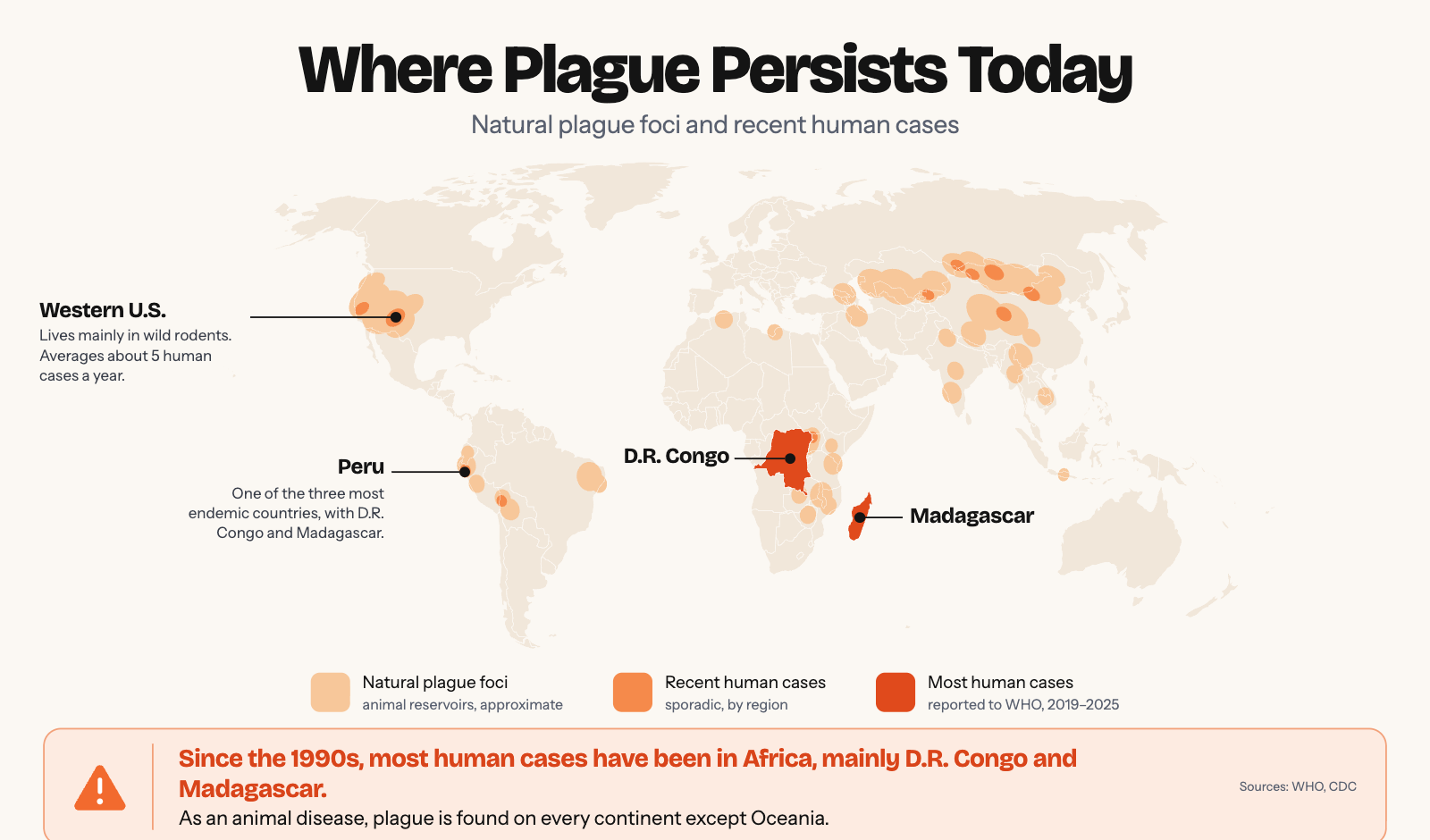
So technically, plague already lives here, mostly among wild rodents and their fleas. The poor rats have been taking all the reputational damage while those little bastards enjoy a woodland brand identity.
Septicemic plague is what happens when Y. pestis gets into the bloodstream and starts reproducing there. This is the horror-show version that can cause organ failure, bleeding under the skin, and tissue death in fingers, toes, and other extremities.
Very bad. Still not a disease you acquire because the guy three aisles over sneezed in Target.
Then we arrive at pneumonic plague. Pneumonic means the bacteria have infected the lungs. Sometimes another form of plague spreads there. Primary pneumonic plague can also begin when a person directly inhales infectious respiratory particles.
This is the form everybody keeps shouting about because it is the only form of plague that spreads from one person to another through the respiratory route. And yes, pneumonic plague is serious as hell. Untreated, it can kill frighteningly fast.
But please notice the word untreated.
We know what Yersinia pestis is and how to diagnose it. We know how to isolate patients, identify close contacts, and give them preventive antibiotics.
Besides, plague does not normally float through buildings like measles or move silently through populations the way COVID could. Person-to-person plague transmission generally requires direct, close exposure to infectious droplets from someone or an animal with plague pneumonia. The last identified person-to-person transmission in the United States occurred during the 1924–25 Los Angeles outbreak.
That does not make pneumonic plague cuddly. Of course, it is a very dangerous disease. A dangerous disease with epidemiological characteristics we already understand.
Meanwhile in Siberia
Now let’s discuss what we actually know about the Russian case. This will be a brief section.
Because, so far, we know very fucking little.
A 28-year-old laboratory worker named Darya Shipilova worked at the Irkutsk Anti-Plague Research Institute in Siberia. She became ill and died on October 2. Her diagnosis, according to Russian authorities, is pneumonia of unknown origin.
Early reports suggested she may have died from pneumonic plague. A regional governor initially wrote that she had died of plague and then changed the wording to say she had possibly died of plague. Stories circulated claiming a laboratory accident involving a broken tube. Russian authorities denied that such an accident occurred.
The World Health Organization claims all identified contacts have tested negative for dangerous infectious pathogens and the risk to the general population is low. As of October 6, Russia says there are no confirmed plague cases in Irkutsk.
Read that again.
We currently have zero confirmed plague cases in Irkutsk.
Maybe Shipilova was exposed at work. Maybe some details haven’t been disclosed. Maybe Russia is lying. For all we know, she got bitten by a vicious marmot.

Perhaps we could determine what killed the woman before deciding she has inaugurated the next global pandemic.
Russia is hiding something? You don’t say…
Now, I can hear the objection. But…but, Ms. Beccia, Russia’s story doesn’t add up.
Correct. It does not. Are you implying that Russia is hiding something? Nooooooo…not dear sweet Putin.
Come on. This is a country that gave us dolls hidden inside other dolls. Ethical transparency has never exactly been the national brand.
All we know right now is that the institute and health authorities mounted a substantial containment response while simultaneously denying that a laboratory accident involving plague had occurred.
Those contradictions deserve investigation. But before we decide that Russia’s anti-plague infrastructure signals the next apocalypse, it helps to know that Russia has been obsessing over plague for roughly a century.
Beginning in the 1920s and expanding dramatically after World War II, the Soviet Union built one of the largest anti-plague systems in history.
And they had a reason. Plague was deeply entrenched in wildlife across enormous stretches of Central Asia and other parts of the Soviet Union. Yersinia pestis lives inside flea stomachs, fleas jump on rodents, and humans occasionally stumbled into the wrong ecological neighborhood and got caught in the middle.
So the Soviets went after plague with the subtlety you would expect from the Soviets. Thousands of scientists and field workers mapped plague reservoirs, trapped rodents, collected fleas, vaccinated people, poisoned burrows and sprayed insecticides. At various points they burned vegetation, plowed up rodent colonies and dropped DDT on enormous areas.
Basically, if a gerbil looked suspicious, Moscow had a five-year plan for it.
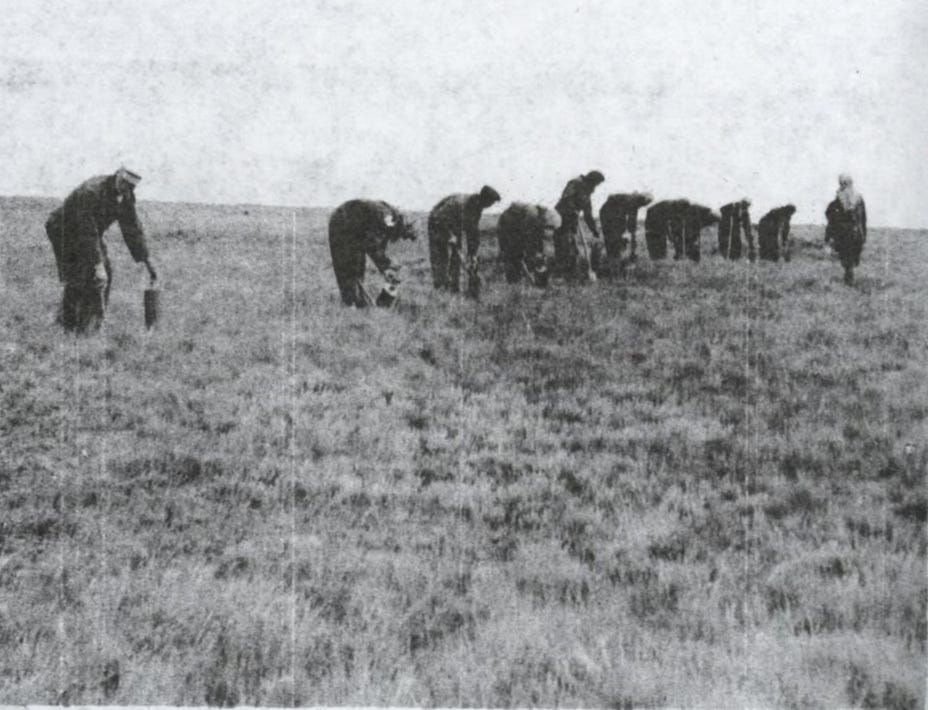
And here is the hopeful part — it worked.
Human plague cases dropped dramatically. Soviet scientists became very good at understanding plague ecology — where it lived, how it moved between animals and humans, and where the danger zones were.
What they could not do was eradicate the little bastard. Because plague lives in nature, and nature does not give a shit about centrally planned production targets.
Kill the rodents and eventually more rodents arrive.
Kill the fleas and eventually more fleas arrive.
Yersinia pestis waits.
Eventually Soviet scientists accepted reality and shifted from trying to eradicate plague to monitoring and controlling it.
Unfortunately, the politicians were less enthusiastic about revising their report card. In 1959, a Soviet official told the World Health Organization that there had been no human plague cases in the USSR since around 1928.
Yeah, so that was a pestilent lie.
Later researchers digging through Soviet records found continued human cases and outbreaks. Soviet plague scientists were forbidden from discussing those cases publicly. Reports disappeared from the press and international reporting because admitting that people were still getting plague meant admitting that the eradication campaign had failed.
So Russia has two very long historical traditions when it comes to plague.
Taking plague extremely seriously.
Not necessarily telling the rest of us just how serious.
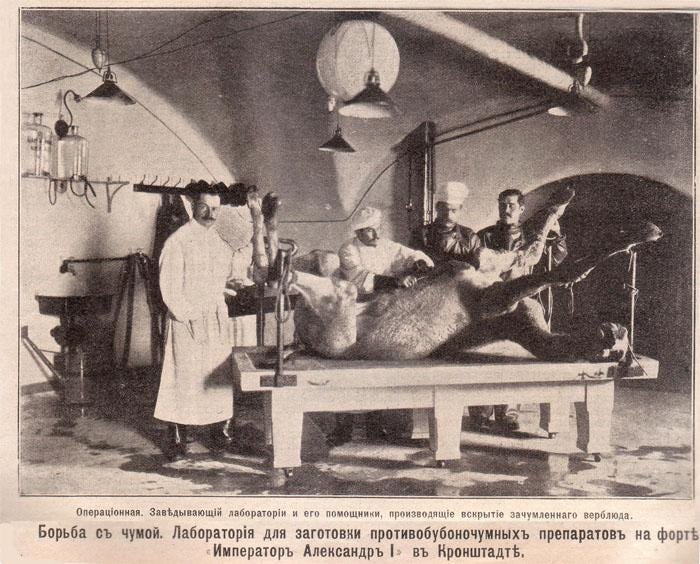

Now look again at the coverage of Darya Shipilova’s death. Russia operates anti-plague institutes. Oh, no! Ring the plague bells. Yeah, it has for generations.
Russia reacts aggressively when it suspects plague. Yes, because it would be foolish not to.
Russia may be withholding information about a possible plague case. Have you met Putin?
To be clear, those facts deserve scrutiny. But they are not evidence that something unprecedented has suddenly happened. And this is where some of the fearmongering starts to feel either historically illiterate or awfully irresponsible.
A century-old Russian plague problem, a lab built to study it, and a history of concealing plague are not evidence that Russia is concealing a biological weapon to take down humanity. It is like seeing smoke coming from the chimney of a house that has burned wood for a hundred years and announcing that you have discovered evidence of arson.
Maybe there is an arsonist. But the smoke is not your proof.
Pandemic Is Not a Synonym for Bioweapon
In 1346, Mongol forces were besieging the Genoese trading city of Caffa on the Crimean coast. Then plague broke out among the besieging army.
According to an account by the Italian Gabriele de’ Mussi, the attackers responded with the sort of military ingenuity one expects from people who had not yet invented the Geneva Conventions.
They hurled plague-infected corpses over the city walls.
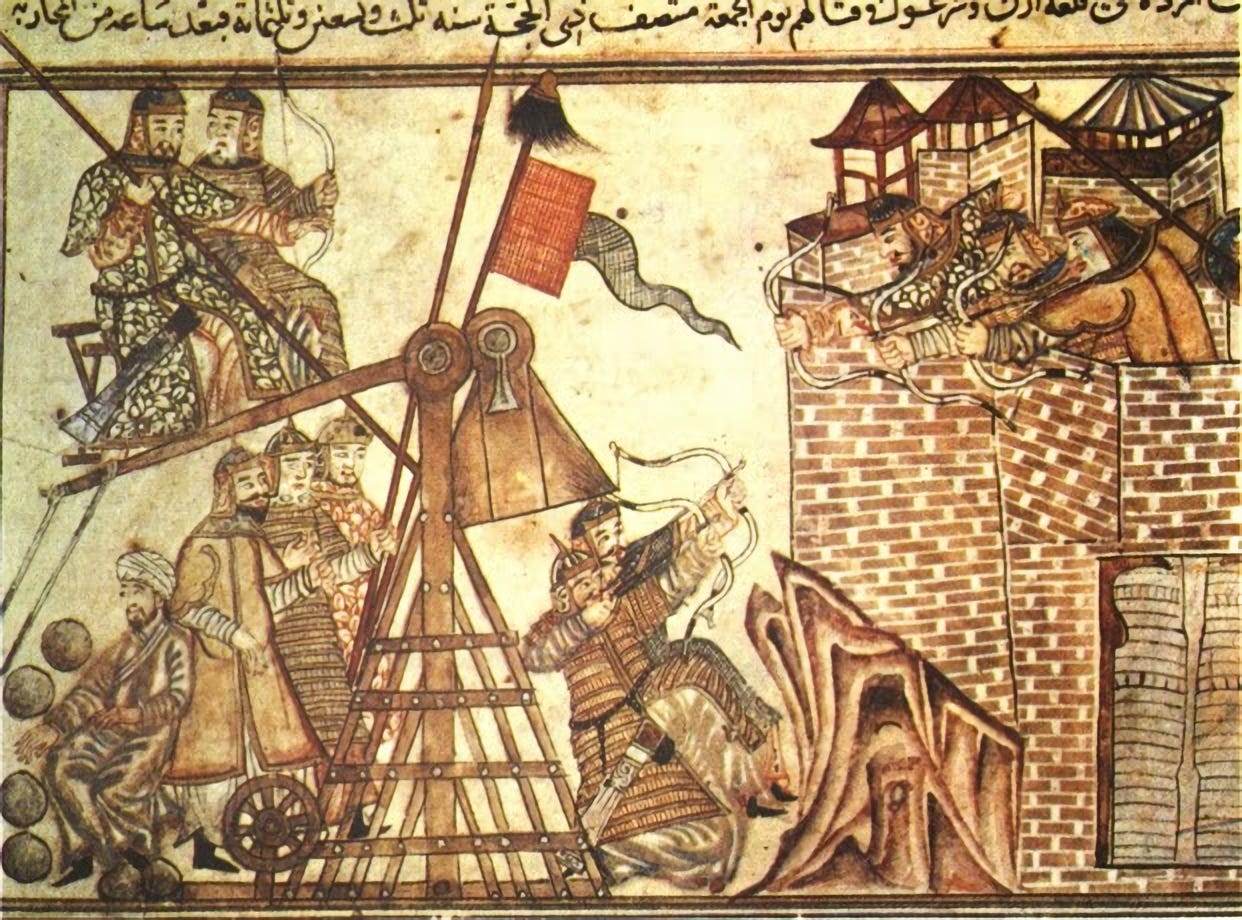
The historical account is not ironclad. De’ Mussi was not standing there taking notes, and scholars have debated the details. But the CDC’s historical analysis concluded that the biological attack was plausible and that it may have introduced plague into Caffa. The same analysis found that Caffa probably was not responsible for carrying the Black Death into Europe. In other words, the pandemic was moving along other routes regardless of the flying plague corpses.
Which is almost comically perfect for our discussion. The corpse trebuchet did not cause the pandemic. However, it was still biological warfare. There is the distinction journalists keep blurring.
Pandemic potential asks whether an infectious agent can sustain efficient person-to-person transmission across large populations.
Bioweapon potential asks whether somebody can deliberately use a biological agent to harm people.
Different questions.
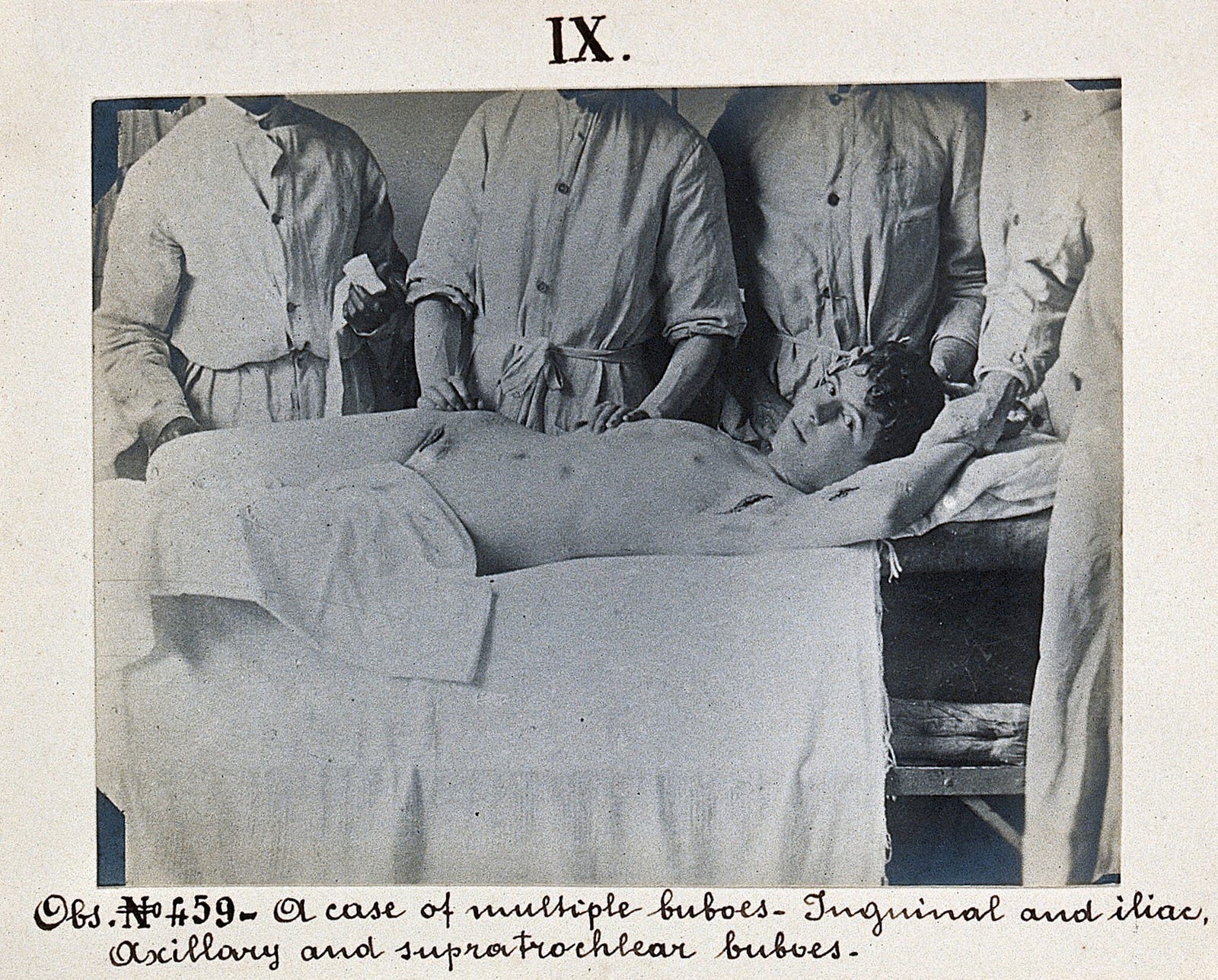
A biological attack could cause enormous casualties through the initial exposure. It does not need every infected person to wander off and infect three more people, who infect three more people, who get on planes and take the pathogen to six continents.
In fact, from the perspective of an attacker seeking a bounded military effect, runaway transmission creates a rather obvious problem. You no longer control where your weapon goes. Your soldiers breathe too. Your population has lungs. Borders are imaginary lines to bacteria. This is why I would never describe a biological weapon as neatly controllable. Biology has a notorious problem with instructions.
You can aim the corpse. You cannot give the bacterium a map.
And this is where Russia becomes a much more serious story.
The United States intelligence community’s 2026 Annual Threat Assessment says Russia probably retains the knowledge and capability to produce and employ traditional biological pathogens and toxins. It states Russian scientists continue developing new chemical and biological warfare capabilities. More broadly, the assessment says countries with chemical and biological weapons programs have been developing capabilities for tactical uses including targeted killings and special military operations, while pursuing methods that make attacks more difficult to detect, treat, or attribute.
Now I’m listening.
But that does not prove Shipilova died in a biological-weapons accident. It does not prove Russia was experimenting with weaponized plague. And it certainly does not prove the Kremlin is preparing to unleash Yersinia pestis on anybody.
A worker dying under unexplained circumstances inside a Russian institute that handles dangerous pathogens is a legitimate national-security question. And it is considerably more interesting than pretending the Black Death has booked a flight to Newark.
The one incurable disease that is not a hoax
One detail in this story leaves a familiar taste of black bile.
Donald J. Trump.
Sorry, we need to talk about the most dangerous exploding pus-filled buboes.
Let’s stroll down memory lane to those early quixotic days of COVID. During an actual pandemic, when a novel respiratory virus was already spreading around the planet, Trump repeatedly assured Americans that COVID was a nothing burger.
On January 22, 2020, after the first confirmed U.S. case of COVID, he said the country had it “totally under control.”
On February 27, he predicted the virus would disappear “like a miracle.”
In March, after privately acknowledging to Bob Woodward that COVID was highly contagious and deadly, Trump told Woodward that he preferred to “play it down.” Then he continued gaslighting Americans and claiming the pandemic would disappear even as the U.S. death toll climbed.
So imagine my surprise when Trump discovered epidemiological anxiety in October 2026.
A reporter asked him about the Russian plague story.
Remember where we are at this point. No confirmed outbreak or plague case in Irkutsk. We still have no confirmation that Shipilova even died of plague. WHO says the general risk is low.
And Trump suddenly sounds like medieval Europe has breached the gates. He called it a “rough disease.” He announced that microbes had become “stronger and smarter.” He compared them to “an army.” He repeated that germs had grown stronger and said the United States was looking at the Russian situation “very strongly.”
During an actual pandemic, everything would disappear and blow over. Now, Russia reports zero confirmed plague cases, and suddenly the microbes are organizing battalions.
So why did Trump disease narrative change? Is it time to summon the plague doctors and kill your cat?
I am just asking questions. Maybe there is a perfectly innocent explanation for Trump’s newfound respect for microbes. I have no evidence that his comments are part of some coordinated attempt to frighten Americans before an election, and I am not going to manufacture certainty while criticizing other people for doing exactly that.
But journalists might want to notice the ironic juxtaposition.
The next regularly scheduled federal election is November 3rd — 28 days from today. Millions of Americans will walk into schools, churches, libraries and community centers. They will wait in lines. They will squeeze past strangers. They will enter little rooms full of their neighbors and breathe the same air.
As I mentioned in past essays, Trump needs to manufacture an emergency. Let’s not make it this easy for him to find one.
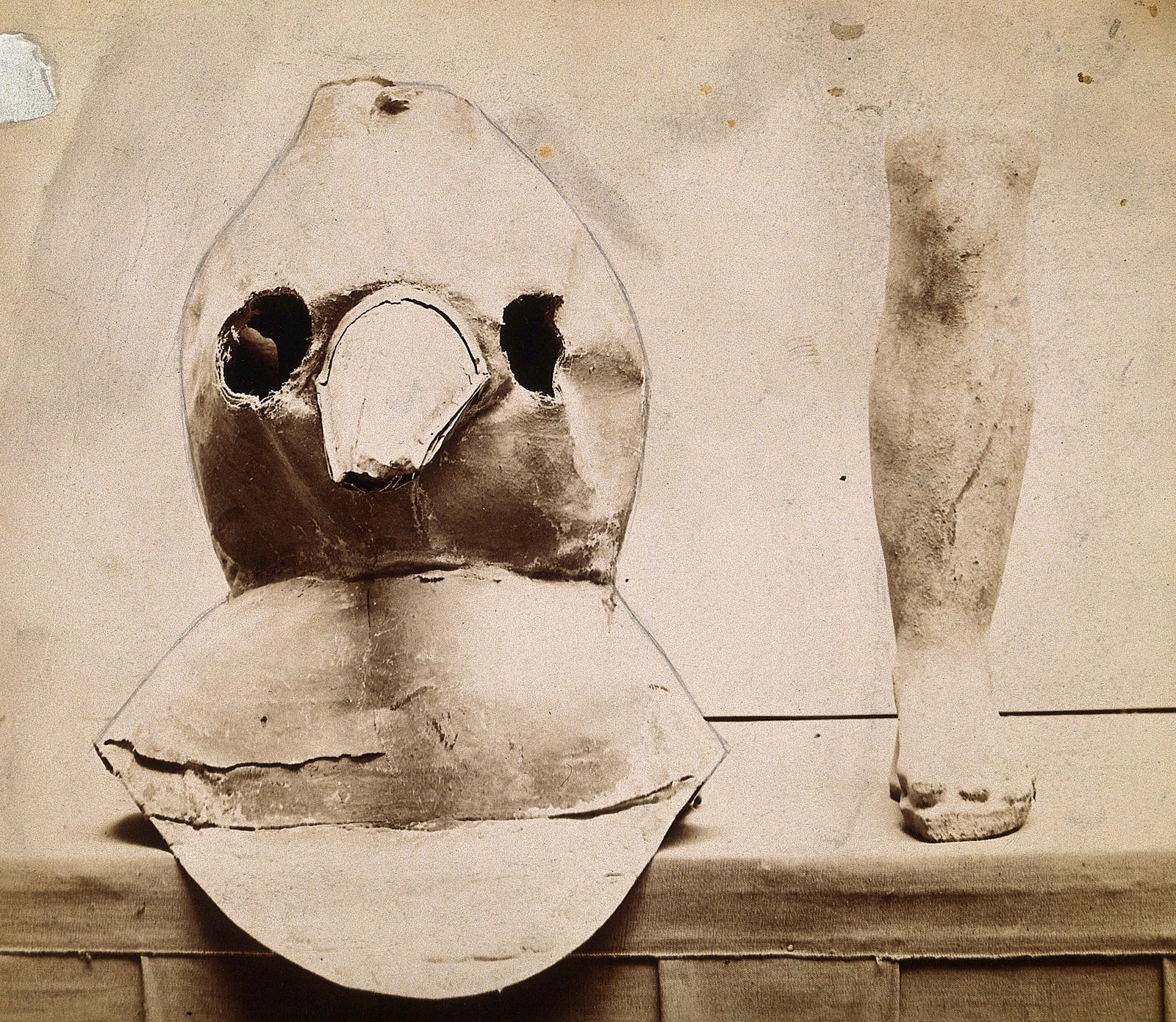
The plague masks come off…
If you’re worried about biological warfare, investigate biological warfare. Better yet, worry about avian flu — a far bigger threat.
But don’t wrap a very real threat with pandemic clickbait. Americans have been traumatized enough. Fearmongering does not make the story more serious. Instead, it obscures the part we should actually be taking seriously.
This gets even grosser when the terrifying version sits behind a paywall. If your headline tells readers that they may be facing a global health crisis, but readers have to hand over a credit card before reaching the epidemiological qualifications, what exactly are we doing here? Are we warning the public? Or are we monetizing the adrenaline spike?
So by all means, keep sending me plague stories. I’m genuinely touched that exploding buboes, red crosses on doors, and corpses piled up like sardines make you think of me.
But for the next few weeks, I will be focusing on the election.
We have a democracy to save.

Carlyn Beccia is an award-winning author and illustrator of 13 books. The Grim Historian is a reader-supported publication. To receive new posts and support my work, consider becoming a free or paid subscriber.
That was a great a article. I appreciate your style of writing.
You are correct that the pt numbers and actual diagnosis is critical.
That said... Let me introduce Ebola in a time of chaos in Africa. It's about to, if not already floating on the river transport systems. The system to contain this is poor or no longer functional. If this hits Kinshasa you can watch a linear infection go exponential.... For a while.
I hope the vaccine for this is found but my guess is that it won't be and government control will be lost.
Kinshasa has 17 million people and.
If I had to worry it would be this. Diagnosed, 50 percent death rate spreading wildly and bordering on a river transport system.
Love your writing and history.
Stay safe and don't be in Kinshasa after December.
Oh, I was disappointed not to see my favorite public health chestnut salted away somewhere in this timely essay: quaranta giorni = quarantine, from the practice in Dubrovnik, then Venice in the 1300's, of keeping ships out in the port for 40 days until they were sure there was no plague. We been doin' this a looooong time. And I think you're right about the distraction attempt.